
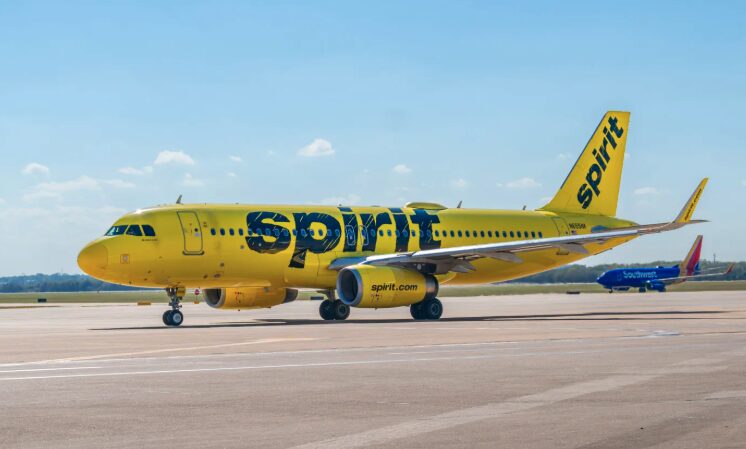
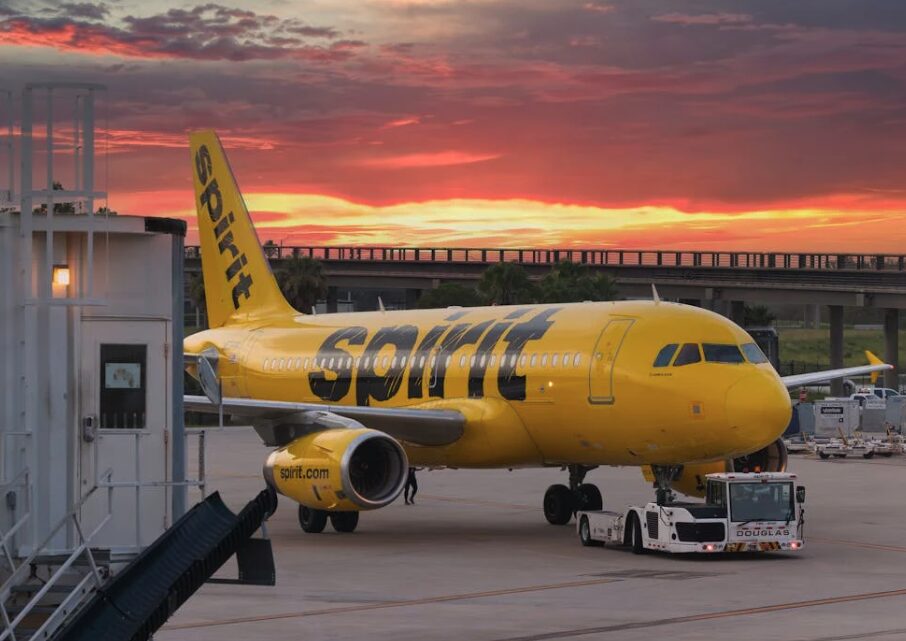
In recent months, global instability caused by the war in Iran, pushed jet fuel prices higher, affecting carriers across the globe. But not all airlines are impacted equally. Some adapted by cancelling flights, some raised ticket prices, but Spirit Airlines completely shut down.
Legacy carriers, for example, often have:
- stronger financial buffers
- diversified revenue streams
- premium pricing power
Low-cost airlines don’t. They operate on razor-thin margins, which means even a small disruption can have outsized consequences.
For Spirit Airlines, this wasn’t just another challenge. It was a stress test the system wasn’t built to handle. Spirit had been under pressure for a while. Thin margins, rising competition, and a fragile business model that depended on keeping costs lower than almost anyone else in the industry. But when fuel prices suddenly spiked, everything accelerated. Fast.
For an airline built on the promise of ultra-cheap tickets, even small cost increases can be dangerous. But this wasn’t small. According to statements made in court, fuel expenses surged by around $100 million in just two months. That kind of shock doesn’t just hurt, it destabilizes.
So the question is no longer hypothetical. It’s real. Vote, tell us what you think.
The business model that worked, until it didn’t
To understand what happened, you first need to understand how Spirit Airlines actually works.
Spirit isn’t just another airline. It operates on an ultra low-cost model, which means the ticket price you see is intentionally stripped down to the absolute minimum. Everything else is extra. That includes baggage, seat selection, and even basic comfort.

Are you being silenced by cancel culture?
This model works but only under very specific conditions.
- Costs must stay extremely low
- Planes must stay full
- Operations must remain efficient
- External shocks must be minimal
That last point is where things get more complicated. While airlines can adjust pricing strategies and optimize operations, global fuel markets remain completely outside their control. And because fuel represents one of the largest operating costs for any airline, even relatively small price increases can have immediate and significant consequences — in some cases forcing airlines to reduce capacity or even cancel flights altogether, as we’ve already seen happening across the industry.
This is exactly where the pressure begins to build. When Spirit Airlines fuel costs start rising, the entire low-cost model begins to crack under the weight of shrinking margins and limited flexibility.
The tipping point: when fuel prices spike too fast
There’s a difference between gradual pressure and sudden shock.
Gradual increases can be managed. Prices can be adjusted. Costs can be optimized. Strategies can shift.
But sudden spikes? Those are different.
When fuel costs jumped dramatically in a short period, Spirit Airlines fuel costs didn’t just increase, they surged. And that surge quickly drained liquidity, disrupted financial planning, and put restructuring efforts at risk.
This is where the idea of a “tipping point” becomes important.
Spirit wasn’t a perfectly stable company that collapsed out of nowhere. It was already navigating challenges — including competition, financial strain, and strategic uncertainty.
Fuel prices didn’t create the problem. They accelerated it.
Why low-cost airlines are more vulnerable
Not all airlines react the same way to rising costs. Low-cost carriers, in particular, are built differently and that difference is exactly what makes them vulnerable.
Their entire value proposition is based on being cheaper than everyone else. That leaves very little room for error.
When we talk about airline fuel costs impact, this is where it becomes critical. Because for low-cost airlines:
- there’s limited ability to raise ticket prices without losing customers
- profit margins are already minimal
- operational flexibility is lower
- cost increases hit immediately and directly
This creates a fragile balance. And when that balance is disrupted, recovery becomes extremely difficult.
This is also why we’re seeing broader trends across the industry, including flight cancellations due to fuel prices driven by airlines trying to manage costs, reduce routes, and protect profitability.
Spirit Airlines affected by fuel prices
What’s happening to Spirit Airlines is not happening in isolation. It’s part of a larger pattern.
Across the globe, airlines affected by fuel prices are making difficult decisions: cutting routes, adjusting schedules, and rethinking their strategies.
This raises a bigger question: How sustainable is the current airline industry model in a world of volatile energy costs?
Because if one sudden spike can destabilize a major airline, what does that say about the system as a whole?

Ozempic and celebrities: the truth behind rapid weight loss
More than just fuel
It would be too simple, and inaccurate, to say that fuel prices alone caused the crisis.
Yes, Spirit Airlines fuel costs played a major role. But they were only one part of a larger picture.
The company has also faced:
- intense competition from other low-cost carriers
- a failed merger attempt with JetBlue
- ongoing financial restructuring challenges
- shifting consumer expectations
All of these factors created pressure. Fuel prices simply added weight to a system that was already under strain.
This is why many analysts frame the situation differently: not as a single-cause failure, but as a system pushed beyond its limits
Are we seeing the start of a bigger shift?
When one company struggles, it’s a story. When multiple companies face similar challenges, it’s a trend. And when that trend is tied to something as fundamental as energy costs, it becomes something bigger.
The airline industry fuel crisis is not just about one airline. It’s about how dependent modern systems are on external variables they cannot control.
Fuel is one of them. And when it becomes unstable, everything built on top of it becomes unstable too.
What happens next?
So where does this leave Spirit Airlines and the industry as a whole?
That depends on what happens next.
If fuel prices stabilize, airlines may regain some control. If they continue to rise, pressure will only increase. And for companies operating on thin margins, the room to adapt is limited.
This brings us back to the original question: Did fuel prices push Spirit Airlines over the edge?
The most honest answer is this: Yes.
What do you think? Tell us in the comments
Are fuel prices the real issue?
Or are we seeing deeper cracks in the system?
This is your SpeakOutZone.
Your voice. Your platform.

I’m not a doctor or a scientist. I’m a marketing professional who spent years working with health and lifestyle brands. I read a lot, ask a lot, and write about the topics that are worth debating about. My goal isn’t to tell you what to think. It’s to give you well-researched perspectives, honest opinions, and space to voice your thoughts.