

Last updated on August 20, 2026
There was a time when a simple infection could wipe out entire communities. The history of vaccines begins in a world where diseases like smallpox, measles, and polio were not just common — they were deadly. Parents lived with constant fear, knowing that even a minor illness could take their child’s life within days.
Today, that fear is mostly gone.
But something else has taken its place: doubt.
Vaccines are widely considered one of the greatest medical achievements in human history. They have saved millions — possibly billions — of lives. And yet, in recent years, more people are questioning them than ever before.
So how did we go from desperation for vaccines… to skepticism?
The world before vaccines
To understand the present, we need to go back to the past.
Before vaccines existed, infectious diseases were the leading cause of death worldwide. Smallpox alone killed an estimated 300 million people in the 20th century. Measles, now preventable, used to infect nearly every child and caused millions of deaths annually.
There was no real protection. People had no immunity. No prevention and no control.
Outbreaks were inevitable, and survival often depended on luck.
The birth of vaccination and the history of vaccines
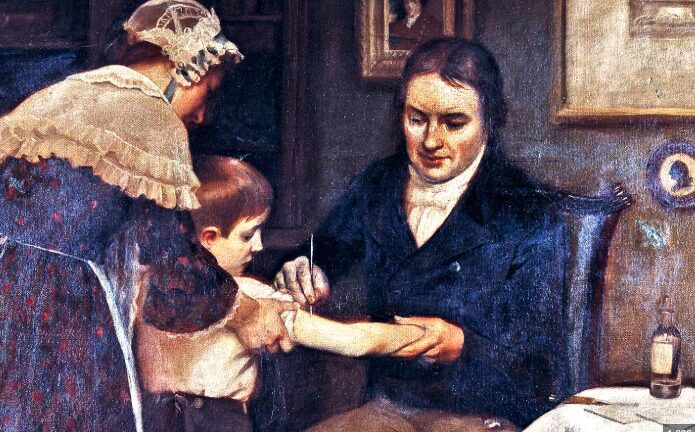
The story of vaccines begins in 1796 with Edward Jenner, an English physician who made a groundbreaking discovery.
He observed that milkmaids who had previously been infected with cowpox — a much milder disease — seemed to be immune to smallpox. Jenner tested this theory by exposing a young boy to cowpox and later to smallpox.
The boy did not get sick.
This was the first successful vaccine.
It marked the beginning of a medical revolution.
Over the next two centuries, scientists built on Jenner’s work, developing vaccines for diseases like rabies, polio, diphtheria, tetanus, and measles. Each new breakthrough reduced death rates and increased life expectancy across the globe.
Vaccination didn’t just save lives.
It changed the course of human history.
When did vaccines become mandatory?
As vaccines proved their effectiveness, governments began to take action.
In the 19th century, several countries introduced mandatory smallpox vaccination laws. The idea was simple: if enough people were vaccinated, outbreaks could be prevented entirely.
This concept — now known as herd immunity — became the foundation of public health strategies worldwide.
Throughout the 20th century, more vaccines were added to national immunization programs. Many countries made vaccines mandatory for children, particularly for diseases like:
- Measles
- Polio
- Diphtheria
- Tetanus
These policies dramatically reduced infection rates.
Smallpox was officially eradicated in 1980 — the first and only human disease to be completely eliminated through vaccination.
It was a historic achievement.
Global access: who gets vaccinated today?
Today, vaccines are more accessible than ever — at least in theory.
According to global health organizations, around 85% of children worldwide receive basic vaccines. Many countries offer them for free through national immunization programs, often supported by international organizations.

But access is not equal.
In low-income regions, millions of children still miss essential vaccines due to:
- Poverty
- Weak healthcare systems
- Conflict and political instability
- Misinformation and distrust
This creates dangerous gaps.
Because vaccines don’t just protect individuals — they protect communities.
When coverage drops, diseases return.
Vaccination rates: are we moving forward or backward?
For decades, global vaccination rates were steadily increasing. More children were protected and fewer people were dying. It seemed like a clear success story.
But in recent years, that progress has slowed — and in some places, reversed.
The COVID-19 pandemic disrupted healthcare systems worldwide, delaying routine vaccinations. At the same time, vaccine hesitancy began to rise, fueled by misinformation, political polarization, and declining trust in institutions. In some countries, vaccination rates have dropped below the level needed to maintain herd immunity.
The consequences are already visible. Diseases once considered “under control” are coming back. Recently, a measles outbreak in India highlighted how quickly preventable diseases can return when vaccination coverage falls.This resurgence highlights the importance of understanding the history of vaccines and why maintaining high vaccination coverage is critical. In the United States, this concern has now reached the White House — with a new executive order reshaping which vaccines are officially recommended for children.
Why are people questioning vaccines now?
This is where the story becomes more complex.
The science behind vaccines has not fundamentally changed. They are still tested, monitored, and widely used.
So why the growing skepticism?
There are several reasons:
1. Success created distance
Ironically, vaccines have been so effective that many people have never experienced the diseases they prevent.
Without visible fear, the perceived need for vaccines decreases.
2. Information overload
The internet has made information more accessible — but not always more accurate.
Social media platforms have amplified both facts and misinformation, making it harder for people to distinguish between the two.
3. Trust issues
In many parts of the world, trust in governments, pharmaceutical companies, and institutions has declined.
This affects how people perceive public health recommendations. One recurring example: the persistent belief that vaccines cause autism, a claim first published in 1998 that continues to shape public opinion despite being scientifically discredited.
4. Personal freedom vs. collective responsibility
For some, vaccination is not just a medical issue — it’s a question of personal rights. Should individuals be required to vaccinate for the benefit of society?
There is no universal agreement.
This tension is playing out right now in the debate over whether the MMR vaccine should be split into three separate shots — where parental choice and public health guidance are directly at odds.
The numbers behind the debate
Despite the controversy, vaccines continue to save lives.
It is estimated that vaccines prevent 4 to 5 million deaths every year globally. Diseases like polio are now close to eradication, and many others have been significantly reduced.
At the same time, millions of children still miss routine vaccinations each year.
This creates a paradox.
We have the tools to prevent disease — but not everyone uses them.
Are vaccines still necessary today?
This question lies at the heart of the debate. If diseases are rare, do we still need vaccines?
The answer, according to most experts, is yes.
Because the reason these diseases are rare… is vaccination. The proof lies in the history of vaccines. When vaccination rates drop, the diseases come back. This has been proven repeatedly, from measles outbreaks to the resurgence of whooping cough in certain regions.
Vaccines are not just about the present. They are about preventing the past from repeating itself.
Check out other polls on similar topics.
A divided world and a question that remains
Today, we are living in a strange moment in history.
On one hand, we have more scientific knowledge than ever before. Vaccines have extended life expectancy, reduced suffering, and protected millions of people from diseases that once caused widespread fear.
On the other hand, trust has become one of the biggest challenges of modern healthcare.
Vaccines, once seen as a universal symbol of progress, have become a topic of debate, skepticism, and conflict.
This is no longer only a discussion about science.
It is also a discussion about trust, information, personal freedom, and the relationship between individuals and society.
The history of vaccines shows one important lesson: medical progress depends not only on discoveries, but also on whether people believe in them.
So the question remains:
Have vaccines made the world safer — or have they created new divisions in society?
This is your SpeakOutZone.
Your voice. Your platform.
FAQ
When was the first vaccine created?
The first successful vaccine was developed by Edward Jenner in 1796 against smallpox. His discovery became the foundation of modern vaccination and changed the history of public health.
Why did people start doubting vaccines?
Trust in vaccines declined due to a mix of factors, including misinformation, changing media environments, political debates, and concerns about safety and personal freedom.
How did vaccines change society?
Vaccination helped reduce deaths from infectious diseases and changed the way societies approach disease prevention and public health.

I’m not a doctor or a scientist. I’m a marketing professional who spent years working with health and lifestyle brands. I read a lot, ask a lot, and write about the topics that are worth debating about. My goal isn’t to tell you what to think. It’s to give you well-researched perspectives, honest opinions, and space to voice your thoughts.