
Last updated on July 23, 2026
The war in Iran — which many see as unnecessary and avoidable — is already creating ripple effects far beyond the region. The situation has been escalating for some time and now the consequences are becoming increasingly visible in everyday life. One of the clearest examples? Flight cancellations.
Due to disruptions linked to the conflict, global fuel supply chains are under pressure. Oil transport routes are becoming unstable, exports are being restricted, and prices are rising. As a result, airlines are facing limited access to jet fuel — a problem that directly affects how often planes can take off.
This is where things begin to connect. Higher fuel prices don’t just mean more expensive travel — they reduce mobility altogether. In some ways, this starts to resemble what we described in our article on lockdown: not a forced restriction, but a “natural lockdown”, where movement becomes limited simply because resources aren’t available.

And now, we are beginning to see that shift in real time.
Flight cancellations are no longer hypothetical
Since the beginning of the war in Iran, discussions around fuel shortages and travel disruption felt speculative. Now, they are turning into facts and airlines are already adjusting.
Vietnam Airlines, for example, has announced it will cancel 23 flights per week across domestic routes starting in April. The reason is clear: looming jet fuel shortages. Several routes are being completely suspended, while others are being reduced to conserve fuel.
This is not an isolated case.
Airlines globally are:
- reducing flight frequency
- prioritizing essential routes
- introducing fuel surcharges
- cutting less profitable connections
In some regions, governments and aviation authorities are actively managing capacity to ensure that critical travel — such as trade, diplomacy, and key domestic routes — remains operational.
Everything else? Becoming less certain.
Why flight cancellations are increasing
At the core of rising flight cancellations is one simple issue: fuel availability.
Jet fuel is not evenly distributed around the world. Many countries depend heavily on imports. When supply chains are disrupted — whether due to war, political decisions, or restricted exports — airlines feel it immediately.
In this case, the conflict involving Iran has played a central role.
- Key oil routes are under pressure
- Some countries have limited fuel exports
- Prices are rising rapidly
- Supply is becoming unpredictable
When fuel becomes harder to secure, airlines don’t have many options.
From expensive flights to fewer flights
At first, people notice price increases. Flights that once felt affordable suddenly become expensive. Budget airlines raise fees. Long-haul travel becomes harder to justify.
Question for you:
But what happens next is more significant.
There are simply fewer flights available.
This creates a chain reaction:
- Less availability → higher demand
- Higher demand → higher prices
- Higher prices → fewer people traveling
- Fewer passengers → more route cuts
And eventually, we reach a point where flight cancellations are not just reactive — they become structural.
Let’s break it down with some numbers.
How much fuel does a single flight actually need?
To understand why flight cancellations are happening, it’s important to look at the numbers.
A typical short- to medium-haul aircraft like a Boeing 737 or Airbus A320 burns around 2.5 to 3 tons of fuel per hour, which translates to roughly 5 to 6 tons of fuel for a standard 2-hour flight.
That means every single flight requires a significant amount of fuel — and when supply becomes unstable, the impact adds up quickly.
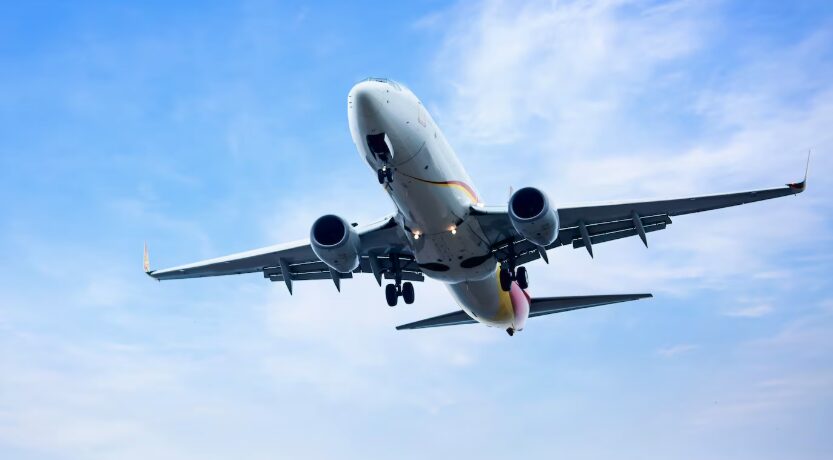
If an airline suddenly has access to 100 tons less fuel per week, that can mean cancelling around 20 or more flights just to stay operational. This is exactly what we are now seeing in practice.
Vietnam Airlines, for example, has announced it will cancel 23 flights per week due to fuel shortages — a number that aligns closely with real fuel consumption calculations.
A shift in how airlines operate
Airlines are not just reacting short-term — they are adapting.
We are seeing a shift toward:
- prioritizing high-demand, high-value routes
- cutting smaller or less profitable destinations
- focusing on essential connectivity
This means that some locations may become:
- harder to reach
- more expensive to access
- less frequently connected
For travelers, this changes expectations.
Flying is no longer guaranteed convenience. It becomes something you plan more carefully — and sometimes, something you simply can’t rely on.
Have fuel shortages already affected your travel?
For some people, this isn’t theoretical anymore.
Flights are being:
- delayed
- rescheduled
- cancelled
And while airlines don’t always publicly state “fuel shortage” as the direct cause, the underlying pressure is there. Operational decisions are increasingly influenced by fuel availability.
The broader impact of flight cancellations
When we talk about flight cancellations, it’s easy to think only about travel plans. But the impact is much wider. Air travel is deeply connected to global business, tourism, supply chains, and international relationships.
When flights decrease, everything slows down.
Businesses that rely on travel may face delays. Tourism-dependent economies may struggle. Logistics networks may become less efficient.
Is this the beginning of a bigger shift?
This is where the conversation becomes more complex.
Are we looking at a temporary disruption — or the beginning of a longer-term change?
What do you think?
Because if fuel shortages continue, and if geopolitical tensions remain unstable, this may not resolve quickly.
Instead, we could be entering a period where:
- travel is less accessible
- movement is more limited
- global mobility is no longer taken for granted
Not a lockdown in the traditional sense — but something that starts to feel similar.
The connection people are starting to notice
More and more people are beginning to connect the dots.
War → fuel disruption → higher prices → reduced travel → flight cancellations
What once felt like separate issues are now clearly linked.
What this means for you
If you’re planning to travel in the coming months, there are a few realities to keep in mind:
- Flight availability may be limited
- Prices may continue to rise
- Schedules may change more frequently
- Flexibility will become more important
This doesn’t mean travel is impossible.
But it does mean it’s becoming less predictable.
A new travel reality
For years, air travel has been defined by accessibility and convenience. Low-cost airlines, frequent routes, and global connectivity made it easier than ever to move around the world. Now, that model is under pressure. Fuel shortages, rising costs, and geopolitical instability are reshaping what travel looks like.
And flight cancellations are one of the first visible signs of that shift.
Final thought
We are not fully there yet.
Planes are still flying. Routes still exist. Travel is still possible.
But something is changing.
And if current trends continue, flight cancellations may not just be a temporary inconvenience — they could become part of a new normal.
What do you think?
Vote in the polls. Share your opinion in the comments.
This is your SpeakOutZone.
Your space to express.

I’m not a doctor or a scientist. I’m a marketing professional who spent years working with health and lifestyle brands. I read a lot, ask a lot, and write about the topics that are worth debating about. My goal isn’t to tell you what to think. It’s to give you well-researched perspectives, honest opinions, and space to voice your thoughts.