


Last updated on July 23, 2026
The debate over smartphones in schools has exploded in recent years. Once seen as helpful tools for communication and quick research, smartphones are now increasingly viewed as classroom disruptors. Teachers report declining attention spans. Parents worry about social media drama happening during lessons while students argue that phones are part of modern life.
The question is no longer whether phones influence school environments.
The question is: should schools ban them?
Across the world, governments are starting to take sides and the decisions are getting more radical.

What research says about phone use in school children
Studies examining smartphones in schools consistently show one pattern: when phones are easily accessible, attention drops.
A widely cited study from the London School of Economics found that after schools introduced smartphone bans, student test scores improved — particularly among lower-performing students. The effect was comparable to adding several extra days of learning per year.
Other research suggests that simply having a smartphone visible on the desk reduces cognitive capacity. Even if students don’t touch it, part of their brain remains alert to potential notifications.
This phenomenon is sometimes called “brain drain” — where attention is partially consumed by the possibility of interruption.
But critics argue something important:
Is the phone the problem — or is it how we’ve integrated it into school systems?
Social media in the classroom: the hidden layer
When discussing phone use in school children, we’re rarely just talking about hardware.
We’re talking about social media.
During school hours, students may be checking Instagram or responding to Snapchat streaks. Some could be watching TikTok videos instead of listening to the teacher and engaging in virtual group chats.
The emotional turbulence that once waited until after school now follows students into every lesson.
A negative comment posted at 10:15 AM can affect concentration in math class at 10:17 AM.
This is one of the strongest arguments behind smartphone bans in schools: they create a psychological boundary.
But here’s where things get more complicated.

Australia’s bold move on social media age limits
Some countries are moving beyond school bans and targeting social media access itself.
Australia has announced plans to raise the minimum age for social media use to 16, aiming to reduce exposure to harmful content and protect adolescent mental health.
Supporters argue that delaying access allows the brain to mature before entering high-pressure online environments driven by comparison, validation loops, and algorithmic amplification.
Critics call it unrealistic. They argue that teenagers will find workarounds and enforcement will be nearly impossible, therefore, digital literacy is better than digital prohibition.
And here’s the key tension: If governments are willing to regulate social media access, should schools also enforce stricter smartphone rules? Or does that cross into overcontrol?
Do smartphone bans actually work?
Some schools report:
- improved focus
- more face-to-face interaction
- reduced cyberbullying during school hours
- calmer classroom environments
Teachers in phone-free schools often say something unexpected: conversations return. Students talk more. They argue more — but in person.
However, not all results are positive. In some schools enforcement consumes valuable time, students feel treated like criminals, and parents demand constant contact access.
That is why many educators ask an uncomfortable question:
Are we preparing students for the real world by banning technology — or avoiding teaching them how to manage it?
Smartphones in schools: the academic impact
Searches for “smartphone use and academic performance” continue rising, showing strong public concern. Evidence suggests heavy phone multitasking during learning reduces comprehension and long-term retention.
Students who frequently switch between apps while studying tend to:
- remember less information
- perform worse on deep reasoning tasks
- struggle with sustained reading
Yet some technology advocates argue smartphones can enhance learning when integrated intentionally — through:
- interactive quizzes
- educational apps
- collaborative tools
- instant research access
So perhaps the issue is not presence — but purpose.
The psychological environment of modern schools
The deeper issue may not be devices, but digital pressure.
Smartphones themselves are neutral pieces of hardware — it is the ecosystem behind them that shapes behavior.
Algorithms are designed to maximize engagement, not well-being, and that design follows students straight into the classroom. The pressure to respond instantly, stay visible online, and maintain a digital identity does not pause when the school bell rings. For many teenagers, the real burden is not the phone in their pocket, but the invisible expectations attached to it.

When smartphones enter schools, so do:
- constant messaging expectations
- fear of missing out
- viral humiliation risks
- social comparison cycles
Even during breaks, students often gather — physically together, but mentally elsewhere, reinforcing patterns that researchers increasingly connect to rising anxiety levels among young people.You can see groups sitting side by side, each scrolling through separate digital worlds. Conversations are interrupted by notifications, and eye contact competes with screen light. Social dynamics are no longer confined to the playground; they unfold simultaneously online, where screenshots last forever. The result is a hybrid social space where presence is divided — part real, part digital — and students must constantly manage both.
Is this the new normal? Or are we witnessing a slow erosion of in-person social development?
👇 Speak out zone – quick reaction
Vote before reading the comments.
A middle ground: restriction, not prohibition?
Some schools adopt compromise models:
- phones locked in pouches during lessons
- limited access during lunch breaks
- strict no-social-media policies
- digital literacy classes integrated into curriculum
This approach attempts to balance discipline with education.
Because banning smartphones does not eliminate social media — it postpones it until 3 PM.
And that raises a bigger debate: Are social media age restrictions the solution — or just political theatre?
The parent perspective
Parents are deeply divided.
Some feel relieved when schools remove smartphones from classrooms. Others worry about safety and emergency communication. There’s also a generational divide. Many adults grew up without smartphones in school and see bans as logical. Today’s teenagers see phones as extensions of identity.
And identity matters in adolescence.
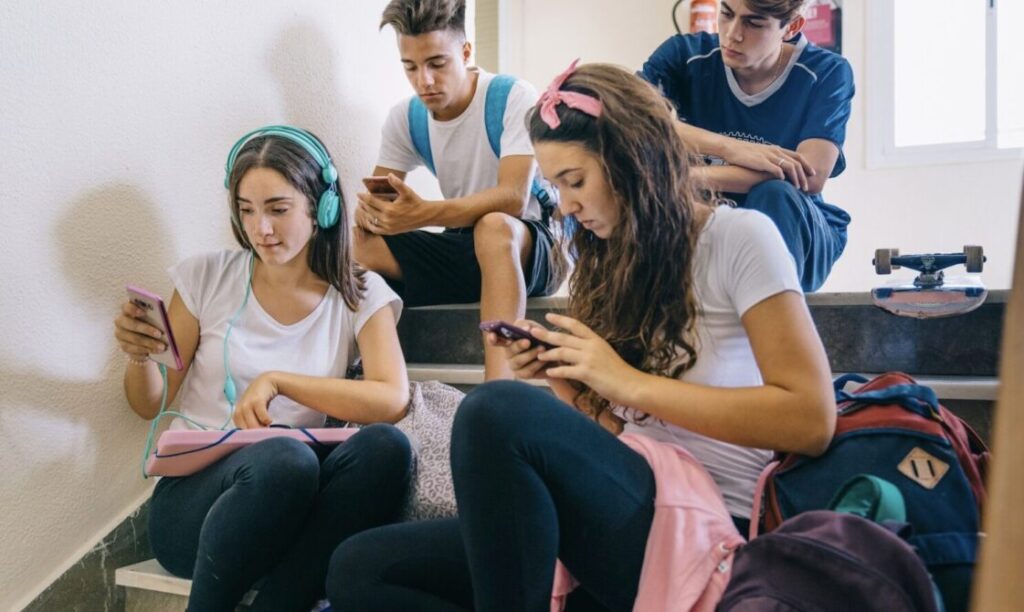
So banning a phone may feel less like removing a device — and more like removing social presence. Is that dramatic? Or accurate?
The real question: control or culture shift?
If schools ban smartphones, what message does that send? What do you think?
The policy choice reveals what we believe about children’s capacity for self-regulation. And this is where debate becomes heated. Some argue teenagers lack neurological maturity to manage addictive platforms. Others argue we underestimate them — and that prohibition creates rebellion.
Tell us in the comments: If you’re a parent, teacher, or student — what has your real experience been with smartphones in school? Have bans helped? Failed? Backfired?
We want real stories, not just opinions.
Is this about education — or anxiety?
Many supporters of school bans tie their arguments back to mental health. They connect classroom distraction to broader anxiety trends, echoing themes about screen time effects. If smartphones amplify stress outside school, perhaps school should be a protected space?
Hm. Are we just panicking?
Society has repeatedly feared new technologies before fully understanding them.
When television entered homes, many adults were convinced it would destroy attention spans, weaken family bonds, and “rot young minds.” Decades earlier, similar anxieties surrounded radio, comic books, and even the novel as a literary form. Each innovation was accused of corrupting youth, eroding morals, or reshaping brains in dangerous ways.
Over time, society adapted. Media literacy developed. Norms evolved.
Critics of today’s smartphone bans argue that we may be witnessing a familiar cycle: a disruptive technology appears, adults panic, and only later do we learn how to integrate it responsibly rather than fear it entirely.
So which side are you on?
Cast your vote.
Then scroll down and explain why.
Because policy decisions are being made right now — and public opinion shapes them.
This is Speak out zone.
What do you think?

I’m not a doctor or a scientist. I’m a marketing professional who spent years working with health and lifestyle brands. I read a lot, ask a lot, and write about the topics that are worth debating about. My goal isn’t to tell you what to think. It’s to give you well-researched perspectives, honest opinions, and space to voice your thoughts.




Ban Technology