

Last updated on June 16, 2026
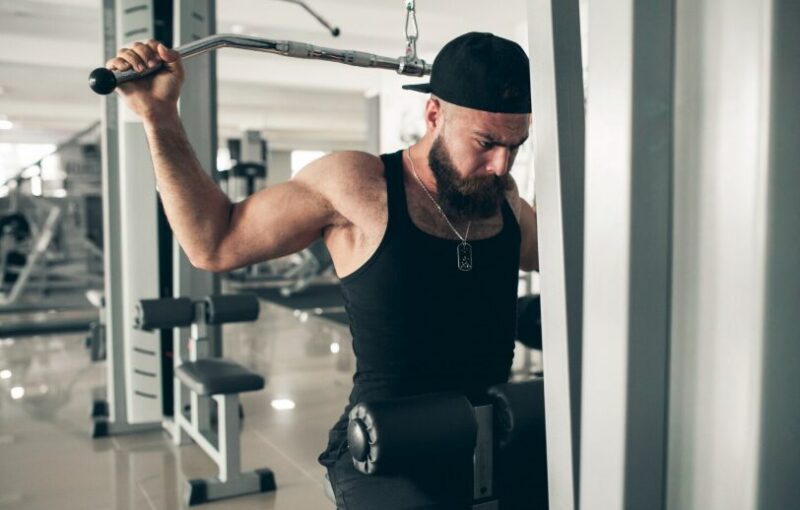
Bigorexia, also known as muscle dysmorphia, is a growing mental health condition where people become obsessed with the idea that they are not muscular enough, even when their bodies are already highly developed.
It is most commonly seen in young men, typically between the ages of 16 and 30, particularly those involved in fitness culture, bodybuilding, or environments where physical appearance and performance are highly emphasized. However, it can affect anyone, regardless of gender or training level.
For most of human history, strength was a byproduct of life. People worked with their hands, moved constantly, and daily physical labor naturally shaped stronger, more functional bodies. There was no constant mirror comparison, no edited physiques on a screen, and no endless feed of “ideal” bodies to measure yourself against.
Today, that has completely changed. Before we dive deeper, tell us, have you ever felt bad about your body image?
The pressure of modern standards
We live in a world where many people spend most of their day sitting, while being exposed to a constant stream of curated fitness content, influencer bodies, and unrealistic physical standards. Social media doesn’t just show fitness — it defines it, repeats it, and amplifies it.
And while bigorexia is mostly connected to men and muscle building, the pressure of body image is not limited to one gender. Women experience a different but connected version of the same distortion. In many ways, bigorexia can be understood as the opposite side of anorexia: one driven by the need to become bigger and more muscular, the other by the need to become smaller and thinner. Both come from the same root: a distorted relationship with the body.
We are also now seeing how deeply this obsession has entered mainstream culture. Public figures and celebrities have increasingly shifted their focus from extreme dieting or body restriction toward faster, medically assisted weight loss with Ozempic.
We get it, everybody wants to look perfect. But are we willing to trade the looks with our health?
What causes bigorexia?
We see bigorexia as a direct result of the environment young men are growing up in today.
The pressure to look strong, dominant, and physically “ideal” has intensified, especially online, where platforms like Instagram, TikTok, and YouTube constantly push hyper-muscular bodies as the standard.
Boys are exposed to this content early and repeatedly. Not occasionally, but daily, through algorithms designed to keep them engaged. At the same time, figures like Andrew Tate and similar voices promote a version of masculinity that equates physical strength with worth, status, and control, often tied to misogynistic narratives. This creates a very narrow definition of what it means to be “enough.”

Also, gym culture has exploded over the past two decades. Globally, the number of gym members has grown significantly, with the fitness industry expanding into a multi-billion-dollar market and millions more people actively training than 20 years ago. Fitness is no longer just a lifestyle, it has become a visible identity, constantly shared, tracked, and compared online. This only reinforces the idea that the body is something to constantly optimize.
Underneath all of this is often low self-esteem, shaped by comparison, external validation, and unrealistic standards. And while there can be genetic or psychological predispositions, we believe the dominant driver is environmental: constant exposure to idealized bodies, social comparison, and the silent expectation that appearance defines value. In that context, bigorexia is not surprising, it is almost inevitable.
Are we really in control of how we see ourselves or is that being shaped somewhere else?
Have you ever caught yourself comparing your body to something you saw online?
Do social media algorithms shape our behaviour?
Vote above and share your thoughts in the comments.
What are the signs of bigorexia?
Bigorexia doesn’t always look extreme from the outside. In fact, many people who struggle with it appear highly disciplined, healthy, and committed to fitness. That’s exactly why it often goes unnoticed or is even praised in today’s fitness culture.
See other polls about HEALTH
But underneath that surface, the mindset is very different. It’s no longer about feeling strong or healthy, it becomes a constant feeling of “not enough,” no matter how much effort is put in.
Some of the most common signs include:
- Constantly checking the mirror or body in reflective surfaces
- Feeling small or “weak” even when objectively muscular
- Never feeling satisfied with physical progress
- Excessive focus on training routines and muscle growth
- Anxiety or guilt when missing workouts
- Comparing the body to others online or in the gym
- Increasing training intensity even when the body is exhausted
- Avoiding social situations because of body insecurity
Over time, this pattern stops being about fitness and starts becoming a mental loop that is hard to break. The body is no longer experienced as something functional, it becomes something that is constantly judged.
What are the consequences of bigorexia?
Bigorexia doesn’t stay only in the gym or in front of the mirror. People who struggle with muscle dysmorphia often push their bodies far beyond healthy limits. Over time, it can affect both physical and mental health in serious ways.
Bigorexia can lead to:
- chronic injuries
- joint and muscle damage
- hormonal imbalances
- extreme fatigue
Some also develop unhealthy eating patterns, strict dieting rules, or over-reliance on supplements in an attempt to constantly “improve” their physique.
But the psychological impact is often even more damaging.
- Anxiety becomes closely tied to appearance.
- Self-worth starts depending on training performance or visual progress.
- Missing a workout can trigger guilt, stress, or even panic.
In more severe cases, social withdrawal becomes common, as individuals begin avoiding situations where their body might be judged or compared.
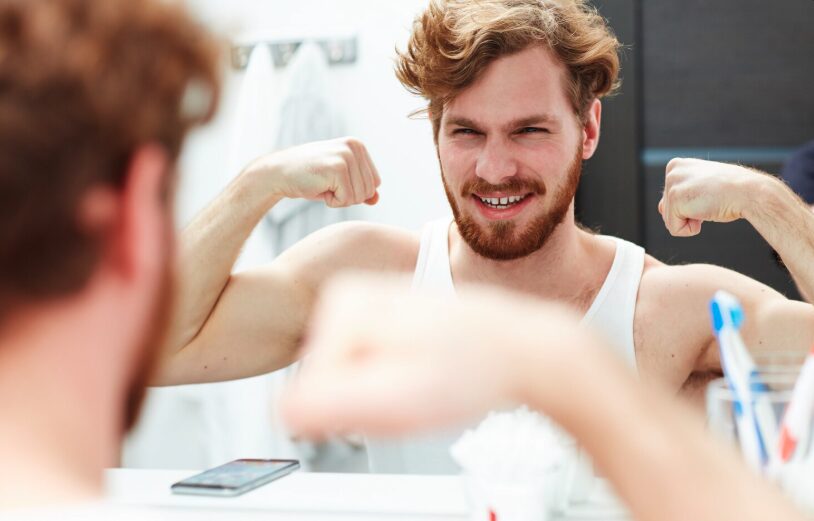
Bigorexia is not just about appearance, it reshapes how a person thinks, behaves, and experiences daily life. In clinical terms, bigorexia is not considered as a simple desire for a fit body, but an obsessive body perception disorder that can become clinically severe. In some cases it shares similarities with eating disorders such as anorexia. Not in the direction of weight loss, but in the obsessive distortion of body image and control over appearance.
What can we do about it?
Treatment typically focuses on addressing the underlying thought patterns and compulsive behaviors that reinforce the condition.
But we think the first step is not medical terminology or labels, it is awareness. Recognizing that what looks like discipline or motivation can sometimes be something much deeper and more harmful underneath.
Pay attention to changes in behaviour. Not just whether your kids are going to the gym, but how they talk about their body afterwards. Constant dissatisfaction, obsession with appearance, or guilt after missing a workout are not just “normal fitness habits.” They are signals that something deeper might be going on.
Trick the algorithms of your social media feed. It CAN be done. Start watching and following different kinds of content, so you break the cycle of constant exposure to perfect bodies. Social media spaces shape how bodies are perceived far more than we like to admit.
Talking about it helps. With a friend, someone you trust, or someone outside of the fitness bubble. Because bigorexia grows in silence, and it loses power when it is spoken out loud.
And if it starts to affect daily life, self-worth, or mental wellbeing, we think reaching out for professional support is not an overreaction — it is a way of taking control back.
The important point is that recovery is possible, especially when the condition is recognized early and taken seriously.
And for those who are already in this cycle… Ask yourself why you are training: is it for strength, health, and feeling good, or is it driven by comparison and the feeling that you are never enough? Because you are. You ARE enough.
Voice your thoughts in the comments or see other polls about health.
This is SpeakOutZone.
Your voice. Your platform.

I’m not a doctor or a scientist. I’m a marketing professional who spent years working with health and lifestyle brands. I read a lot, ask a lot, and write about the topics that are worth debating about. My goal isn’t to tell you what to think. It’s to give you well-researched perspectives, honest opinions, and space to voice your thoughts.