


Last updated on June 16, 2026
Have you heard of hikikomori? It is a word that describes one of the quietest and most overlooked social crises of our time.
In Japan, an estimated 1.46 million people live in extreme social isolation. That’s not a fringe phenomenon. It represents roughly 1–2% of the population or put differently, one to two people out of every hundred.
Picture a street. An apartment building. A neighborhood.
Behind every hundred doors, one or two belong to someone who has withdrawn from society completely. Not going to work, not attending school, avoiding social contact, and in some cases not leaving their room for months or even years.
These individuals are known as hikikomori, a term that no longer describes just a distant, culture-specific phenomenon, but something far more universal. They describe themselves as “living corps”.
What makes this reality even more unsettling is that it’s no longer confined to Japan. Although the term originates there, similar patterns of extreme social withdrawal are increasingly appearing across the world. Often, they remain unrecognized, hidden behind closed doors, and difficult to measure due to the lack of clear data and awareness.
This naturally leads to an uncomfortable question: how many people around us are living this way, completely unnoticed?
Because while the story may begin in Japan, it certainly doesn’t end there. To truly understand the scale and impact of this phenomenon, we need to look closer at the key characteristics that define what it means to live as a hikikomori.
Extreme social isolation
One of the core characteristics of hikikomori is profound social withdrawal. Individuals disengage almost entirely from society, choosing not to attend school, go to work, or participate in any form of social interaction. This is not occasional introversion or a temporary phase, it is a persistent pattern that can last for months or even years. Over time, relationships fade, communication becomes minimal or nonexistent, and the outside world starts to feel distant, overwhelming, or even threatening.
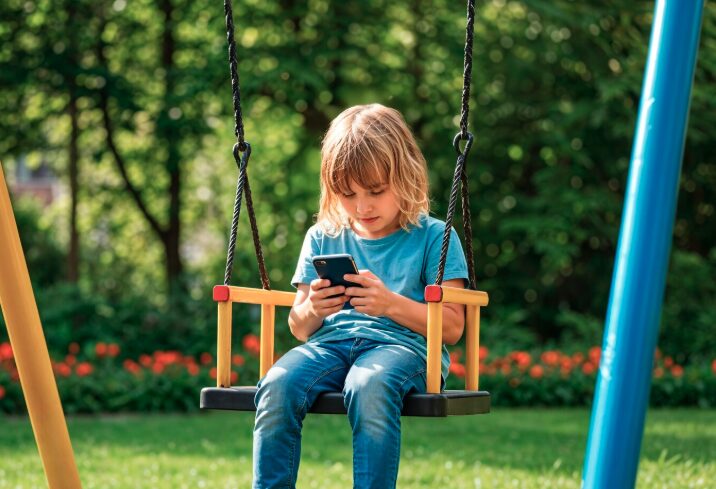
Screen addiction: are we raising the most distracted generation in history?
Living almost exclusively at home
Another defining feature is that life becomes confined to the home environment, sometimes even to a single room. Many hikikomori rarely, if ever, step outside. Daily routines revolve around basic survival within a limited space, often supported by family members. The home, which is typically associated with comfort and safety, gradually turns into a closed system where boundaries between day and night, activity and rest, begin to blur.
Anxiety, depression, or social pressure
Hikikomori is frequently associated with underlying psychological and social factors. Conditions such as anxiety and depression are common, but the causes are often more complex. Intense societal expectations, fear of failure, academic or professional pressure, and difficulty coping with social norms can all contribute to withdrawal. Rather than confronting these challenges, individuals may retreat entirely, finding temporary relief in isolation, even though it often deepens the problem over time.
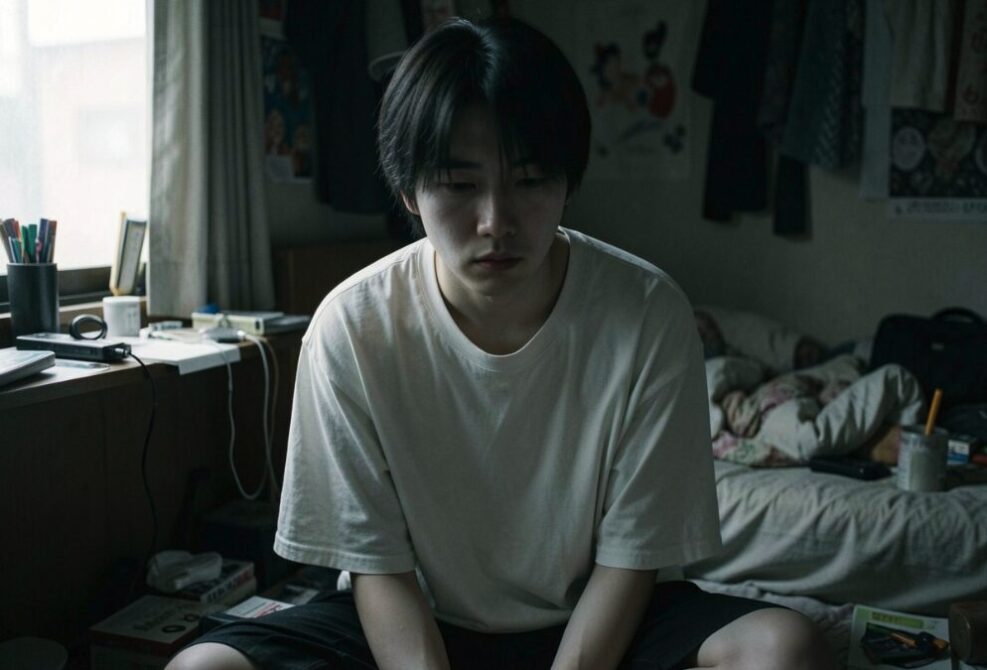
Spending time on the internet, gaming, or other escape activities
To fill the long hours of isolation, many hikikomori turn to digital environments and other forms of escapism. The internet, video games, streaming platforms, and virtual communities provide distraction, structure, and a sense of connection without the pressures of real-world interaction. While these activities can offer short-term comfort, they may also reinforce the cycle of withdrawal by making it easier to avoid reality and harder to re-engage with everyday life.
The question everyone is thinking: how do hikikomori actually make money?
The uncomfortable truth is that most hikikomori don’t “make money” in the traditional sense at all.
The majority of them rely heavily on family support, most often living with their parents who cover basic living expenses like food, housing, and utilities. Studies and reports show that many remain financially dependent well into adulthood, sometimes even into their 40s or 50s, with entire households structured around supporting them.
In some cases, there is also limited support from government welfare programs, although both hikikomori and their families are often reluctant to seek it due to stigma and social pressure.
That said, not every situation is identical. A smaller number of individuals may earn money through remote or low-interaction work, online activities, or occasional freelance tasks, but these cases are far less common. For most, financial survival depends on a quiet, often unspoken system of dependence — one that raises an even more difficult question: what happens when that support is no longer there?
Is hikikomori a mental illness — or something else?
One of the most important things to understand is that hikikomori is not officially classified as a standalone mental illness. In Japan, it is generally treated as a social phenomenon rather than a clinical diagnosis. That said, it often exists alongside mental health conditions such as anxiety, depression, or trauma-related disorders. In many cases, hikikomori is seen more as a response to overwhelming circumstances than a clearly defined disorder on its own.

This gray area creates a serious challenge. Because it doesn’t always fit neatly into existing medical categories, many individuals fall through the cracks. Support systems—whether mental health, educational, or social—are often designed to respond to more visible or urgent problems. As a result, families are left carrying the weight, sometimes for years, providing financial and emotional support without clear guidance or solutions.
Can a “living corpse” come back to life?
If hikikomori is a form of withdrawal, the next question feels almost inevitable:
👉 can someone come back from it?
The answer is not simple—but it is yes, in many cases, they can.
Recovery doesn’t happen overnight. It’s rarely dramatic. Instead, it tends to be slow, fragile, and deeply personal. Many approaches focus on rebuilding the basics first—small steps like reintroducing physical activity, creating minimal daily structure, and gradually restoring the ability to interact with others. From there, some individuals slowly reconnect with education, work, or society in ways that feel manageable rather than overwhelming.
See other polls about SOCIETY
In recent years, there’s also been a growing focus on family-based support, recognizing that hikikomori doesn’t affect just one person—it reshapes entire households. When families are included in the process, outcomes can improve, especially when the goal shifts from “fixing the problem” to understanding and supporting the person behind it.
There are also powerful individual stories. Some people have managed to reconnect with the world by expressing themselves through art, creativity, or online platforms—turning isolation into something meaningful. These cases don’t represent the majority, but they show that change is possible.
And yet, one of the biggest barriers remains: people living as hikikomori are the least likely to ask for help.

Did fuel prices push Spirit Airlines over the edge?
A growing reality we may not be ready for
What makes this topic even more relevant today is how much the world itself has changed. Remote work, online social lives, and digital environments have made it easier than ever to live without physical interaction. For some, this flexibility is empowering. For others, it can become a gateway to deeper and more permanent withdrawal.
Events like global pandemics, economic instability, and social pressure only add to the risk. Many young people today feel uncertain about their future, disconnected from traditional paths, or overwhelmed by expectations they feel they cannot meet. In that environment, stepping away can start to feel less like a failure and more like an escape.
Which raises a difficult thought: are we creating a world where hikikomori becomes easier and more common?
What do you think?
Is hikikomori a personal choice or a social failure?
Is it a temporary escape or a long-term trap?
And most importantly: can someone truly come back once they’ve disappeared for so long?
👇 Share your thoughts below.
This is your SpeakOutZone.
Your voice. Your platform.

I’m not a doctor or a scientist. I’m a marketing professional who spent years working with health and lifestyle brands. I read a lot, ask a lot, and write about the topics that are worth debating about. My goal isn’t to tell you what to think. It’s to give you well-researched perspectives, honest opinions, and space to voice your thoughts.