


Last updated on July 23, 2026
Most people think they use social media to connect with friends, watch funny videos or follow the news. But behind every post, every viral clip and every trending discussion, there is something quietly shaping what appears on your screen and consequently your behavior: social media algorithms.
These systems decide which posts rise to the top of your feed, which topics become viral, and which opinions spread across millions of screens. The question many researchers, journalists and users are starting to ask is simple but uncomfortable: are we really choosing what we see online, or are we being guided toward it?
The answer is not black and white. But the deeper we look into how digital platforms work, the clearer it becomes that our online experience is far less random than we might believe — and that these invisible systems may also play a role in a broader problem researchers now describe as screen addiction.
The invisible architecture of your feed
When you open a social media app, you probably imagine that you are seeing a simple timeline: the newest posts from people you follow.
In reality, most major platforms stopped using purely chronological feeds years ago. Instead, complex systems analyze massive amounts of data about users and then predict what will keep them engaged the longest.
Every scroll, pause, like and comment becomes part of a digital profile. Based on that information, social media algorithms continuously adjust what appears next.
They often prioritize content that triggers strong reactions, such as:
- posts that generate outrage or heated debate
- emotionally charged stories or shocking headlines
- content that encourages rapid sharing or arguments

These patterns are not accidental. Engagement keeps people on the platform longer, which increases advertising revenue. In other words, the system is not necessarily designed to show the most balanced information — it is designed to show what keeps attention.
And attention is often captured by emotion.
Social media algorithms and the attention economy
To understand the influence of social media algorithms, it helps to understand the business model behind social platforms.
Most social media companies operate on an attention-based economy. Their revenue largely comes from advertising, and advertisers pay for visibility. The longer users stay on the platform, the more ads they see.
That means algorithms are optimized primarily for engagement, not necessarily for truth, balance or well-being.
Over time, this creates subtle patterns in the type of content that spreads most easily online. Research has shown that emotionally intense material — especially anger, fear or moral outrage — travels faster through digital networks than calm or neutral information.
As a result, feeds can gradually become more dramatic or polarized without users even noticing.

Screen addiction: are we raising the most distracted generation in history?
People do not wake up one day and decide to enter an ideological echo chamber. Instead, they are slowly nudged there by a system that learns what keeps them scrolling.
How algorithms can influence behavior
When people talk about social media effects, they often focus on mood or mental health. But the influence may go deeper than simple emotional reactions.
Digital systems can shape habits, beliefs and even social behavior.
Consider how recommendation systems work. If someone watches one video about a topic, the algorithm often suggests more content that is similar but slightly more extreme or engaging. Over time, this can create a spiral of increasingly narrow perspectives.
In some cases, researchers believe this process may influence the way people see the world around them.
Possible behavioral effects often discussed include:
- reinforcing existing opinions while filtering out opposing views
- amplifying controversial personalities or polarizing ideas
- shaping trends in politics, culture and lifestyle
The systems themselves do not have political or moral opinions. They simply optimize for engagement. But that optimization can unintentionally reshape public conversations.
The algorithmic shaping of identity
One of the most powerful effects of social media is the way it shapes identity — particularly among younger users.
Teenagers and young adults increasingly discover trends, beauty standards, political opinions and social norms through algorithm-driven feeds.
For example, recommendation systems often promote content that fits recognizable patterns. Certain looks, lifestyles or viewpoints gain more visibility because they generate higher engagement.
That can influence how people see themselves and others.
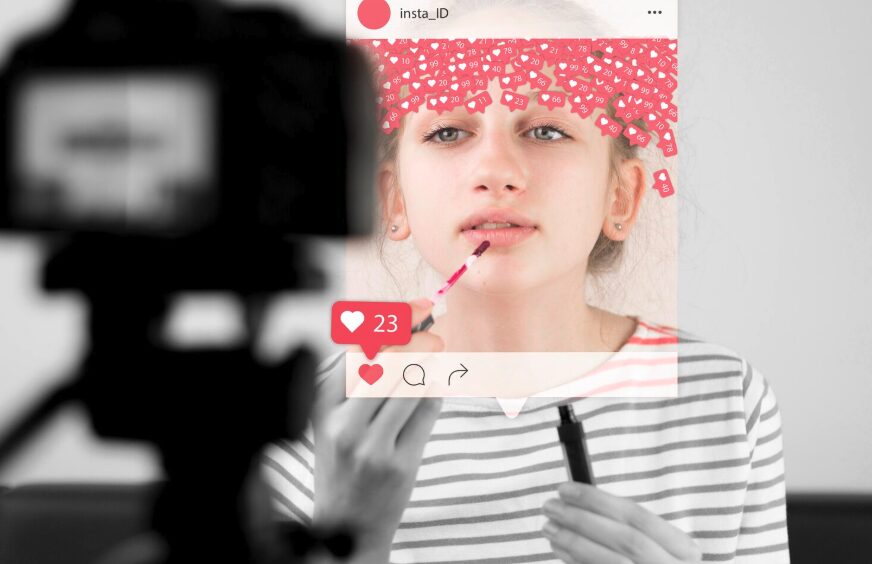
Young users may feel pressure to match popular online identities. Influencers, viral trends and curated images create powerful expectations about success, beauty and lifestyle. Over time, those expectations can feel like reality, even if they represent only a narrow slice of human experience.
Some critics argue that social media algorithms amplify these pressures by rewarding content that fits popular formulas. The result is a digital environment where certain types of identity receive constant reinforcement.
Others argue that the platforms simply reflect society rather than shape it.
The truth likely lies somewhere in between.
Are we losing control of our attention?
Another major concern is how algorithm-driven feeds influence attention itself.
Modern platforms are designed to keep users engaged for as long as possible. Notifications, endless scrolling and personalized recommendations create a continuous stream of stimulation.
This environment can make it difficult to disconnect.
Users often report habits such as:
- opening social media automatically during small moments of boredom
- losing track of time while scrolling
- feeling pulled back to the platform by notifications
These patterns are not necessarily the result of weak self-control. They are often the result of systems specifically designed to capture attention.
Digital designers sometimes refer to this as “persuasive technology” — interfaces built to encourage repeated engagement.
Supporters argue that these tools simply make platforms enjoyable and convenient. Critics say they create addictive patterns that reshape daily life.
The debate over responsibility
As awareness of algorithmic influence grows, so does the debate about responsibility.
Some experts argue that technology companies should redesign their systems to prioritize well-being and balanced information rather than raw engagement. They believe transparency about how social media algorithms work could help users better understand the content they see.
Others worry that regulating algorithms could lead to censorship or manipulation by governments or powerful institutions.
In that view, the solution is not stricter control but stronger digital literacy. Users should learn how algorithmic systems work so they can recognize their influence.
Still others argue that the entire debate exaggerates the problem. People have always been influenced by media, from newspapers to television. Social media may simply be the latest evolution of that long history.
But even skeptics admit that today’s systems operate at a scale and speed that previous media never reached.

Billions of users interact with algorithm-driven feeds every day. That level of influence is unprecedented.
The future of algorithmic influence
As artificial intelligence becomes more advanced, recommendation systems will likely grow even more sophisticated. They will analyze not only clicks and likes but also subtle behavioral signals such as viewing time, scrolling speed and interaction patterns.
Future algorithms may become extremely precise in predicting what captures attention.
This raises difficult questions about autonomy and choice. If a system can predict exactly what keeps someone engaged, how much control does the user really have over their digital experience?
Some researchers believe the next major debate about technology will revolve around this issue.
Not just what algorithms show us, but how much they shape our decisions, habits and beliefs.
At the same time, awareness is growing. More users are questioning the systems behind their feeds, experimenting with digital breaks or demanding greater transparency from technology companies.
In the end, the relationship between humans and algorithms may become one of the defining cultural debates of our time.
Because the real question is not simply what we see online.
It is whether the systems that guide our attention are quietly shaping the way we think, argue and interact with each other.
And that debate is only just beginning.

I’m not a doctor or a scientist. I’m a marketing professional who spent years working with health and lifestyle brands. I read a lot, ask a lot, and write about the topics that are worth debating about. My goal isn’t to tell you what to think. It’s to give you well-researched perspectives, honest opinions, and space to voice your thoughts.