
Last updated on July 23, 2026
I can’t lie – I was hooked. Every scroll, every like, every ping of my phone felt like a tiny hit of heaven. The social media dopamine effect is real, and the more I realize how carefully platforms design their feeds to keep me addicted, the more it makes me sick.
I wasn’t scrolling to catch up with friends or find inspiration but because something deep inside my brain craved it. The tiny rush of pleasure, the buzz of every like, every notification ping. I didn’t just want to check my phone — I needed it.
And it is not just personal frustration. There’s a reason psychologists, neuroscientists, and even legal battles are now framing this as more than “tech overuse.” It’s a neurological loop meticulously designed to keep us coming back for more — and it’s powered by what scientists now call the social media dopamine effect: a feedback cycle that conditions our brains to seek rewards constantly.
We’ve entered an age where tech companies don’t just compete for our attention — they engineer screen addiction. And trust me, once you see how it works, it feels almost predatory. Billions of us are caught in the addiction economy, willingly feeding the beast.
Did you watch The Social Dilemma documentary? If you didn’t, do it!
But before anything else, we want to know how do YOU feel:
The social media dopamine effect: how the loop traps us
The brain uses dopamine as a fundamental reward signal. It tells us, “Hey, that felt good! Do it again.” That mechanism is ancient — it evolved to reinforce survival behaviors like eating or social bonding. But social media platforms have tapped into this system like hackers discovering a backdoor.
Every like, every comment, every swipe triggers a tiny dopamine release. It’s the same chemical that activates when we eat tasty food or achieve a goal.
And that’s just the beginning. Science now shows:
- Dopamine feedback loops in social media create unpredictable reward cycles — almost identical to gambling machines.
- These reward spikes condition us to crave more stimulation, and the brain starts equating scrolling with pleasure and validation.
- Over time, our brains adapt — we need more stimulation for the same dopamine hit, which fuels compulsive use.
This isn’t just theory. Hundreds of thousands of users report that their use feels compulsive, automatic, and beyond their control — classic hallmarks of addiction. Some even describe it as worse than boredom or habit — it’s a neurological craving.
Tech companies don’t just profit from attention — they design neural loops
Here’s the cruel bit: big platforms have engineered this effect. Internal company documents and research — some revealed in court cases — show that executives once acknowledged social media’s addictive potential and optimized designs to maximize engagement.
Algorithmic recommendation systems, infinite scrolling, autoplay videos, and unpredictable content feeds are not random. They’re precisely crafted to stall your dopamine system and keep you engaged:
- Recommendation algorithms tailor content to your likes, feeding dopamine spikes you didn’t even anticipate.
- Endless scroll mechanics remove natural stopping cues, so you don’t know when to quit.
- Notifications are timed to pull you back into the loop even when you’re not thinking about it.
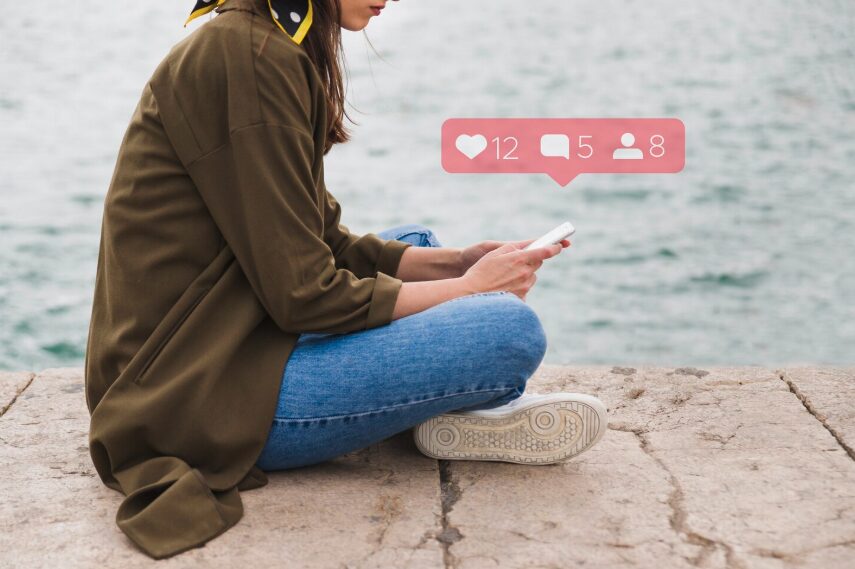
You might think, Hey, it’s just tech, but imagine if a drug company engineered a pill that gave you mini‑pleasure hits all day and rewired your motivation system. Wouldn’t we call that a pharmaceutical addiction?
Yet that’s exactly what companies have done through their social media algorithms.
And it’s not just my opinion — research shows that these platforms affect our reward pathways in ways that mirror addictive behaviors.
This is why endless scrolling never satisfies
Here’s the insidious part: the dopamine effect never gives you closure.
Real rewards in life — finishing a book, spending time with loved ones, learning a skill — don’t automatically demand another hit right afterward. But social media operates on intermittent reinforcement, one of psychology’s most powerful conditioning mechanisms.
It’s the same mechanism behind gambling addictions: unpredictable rewards make you want more, even if the actual experience isn’t fulfilling.
That’s why:
- You check your phone “just one more time.”
- You wake up and scroll before your feet hit the floor.
- You lose hours without remembering what you saw.
That’s not casual browsing — that’s compulsive behavior.
When the addiction economy hits home
It gets worse.
Research tracking more than 4,000 adolescents found that it’s not total screen time that predicts risk — it’s patterns of compulsive, loss-of-control usage that show true addictive behavior. Those with high addictive trajectories were significantly more likely to experience anxiety, depression, aggression, or suicidal ideation.
And among younger groups, phone addiction correlates strongly with psychological problems like stress and depression.
We’re talking about real mental health impacts, not just “kids spending too much time online.”
And companies like Instagram have even had to defend themselves in court, with internal communications described as likening their platforms to a drug, while executives try to distinguish social media use from “clinical addiction.”
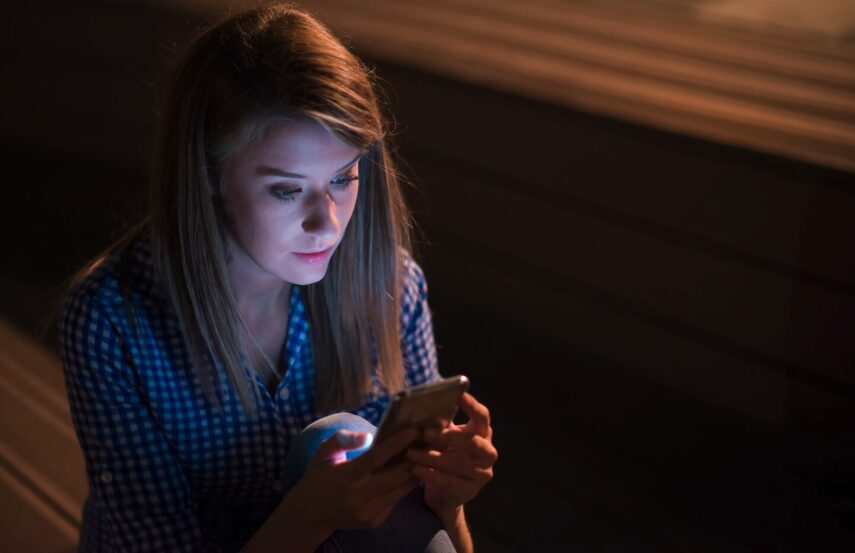
Whether you call it addiction or compulsive engagement doesn’t matter much to the teenager who can’t put down the phone, or the adult who wakes up in the night to check notifications.
My personal descent into the loop
Let me be brutally honest: I didn’t just scroll. I checked my phone even when I didn’t want to. And it wasn’t just a quick glance — it was a ritual I performed without thinking. I caught myself:
- opening apps without remembering why, only to realize I had spent 20 minutes on a feed of memes I barely cared about
- losing hours to a feed I barely cared about, while deadlines, emails, and real responsibilities piled up
- feeling restless when I wasn’t online, like a phantom vibration in my pocket was calling me back
- sneaking glances at notifications while talking to friends or family, even though I knew I was missing their attention
- refreshing endlessly for content that promised novelty but delivered the same recycled opinions, viral clips, and outrage cycles
It didn’t feel good — it felt empty.
It was like my brain had been rewired to seek the next dopamine buzz even when nothing meaningful awaited.
I started noticing how small victories, like a like or a comment, felt more real than finishing a book, cooking a meal, or having a proper conversation.
Sometimes, late at night, I caught myself in the dark, phone in hand, scrolling just to feel something, anything — a laugh, a shock, a rage. And when I finally put it down, I felt hollow, like I had been on autopilot in someone else’s carefully curated world.
I even tried a “digital detox” for a weekend once. The first day was hell — restless, irritable, obsessive. By day two, I started feeling human again, noticing small details around me: the way sunlight bounced off the walls, the rhythm of my own breathing, the sound of real laughter. But by the evening of day three, the pull was too strong; I relapsed into the feed, convincing myself I was “just catching up.”

This was the addiction economy in full force.
Engineered craving for profit, designed to hook me, exhaust me, and keep me coming back for more. And I knew I wasn’t alone — the research was clear: platforms optimized for engagement, and engagement equaled dopamine hits. They didn’t care about our attention spans, our mental health, or the long-term consequences of this constant stimulation.
So what can we actually do about it?
The social media dopamine effect isn’t just about time. It is about neuro reward loops deeply embedded in platform design. I realized I needed more than surface-level fixes.
- First, I turned off my notifications. Every ping, buzz, or red badge had been a tiny jolt of dopamine, pulling me back in. At first, it felt uncomfortable but slowly, that quiet gave me space to notice my own thoughts again.
- Next, I focused on intentional use over passive scrolling. I started asking myself before picking up my phone: “Am I connecting? Learning? Working? Or am I just filling a void?” This simple question made a world of difference. Instead of letting the feed dictate my attention, I began using social media with purpose — messaging friends I cared about, reading news mindfully, or sharing something meaningful.
- I also experimented with scheduled breaks. I designated real, uninterrupted periods where my phone was out of reach — meals, walks, even short morning sessions before work. Even a 30-minute block of undisturbed time helped reset the constant craving.
- Another step was tracking my triggers. I started keeping a small log: when did I pick up my phone, and why? I quickly noticed patterns — boredom, stress, loneliness, or certain times of day were the culprits. Seeing it on paper made it harder to lie to myself and easier to intervene before reflexively reaching for the screen.
- Lastly, I practiced dopamine self-awareness. I reminded myself that each like, notification, or trending post was engineered to trigger my reward system. Awareness alone didn’t break the loop instantly, but it gave me the mental space to choose — instead of being chosen by the algorithm.
None of these steps were instant cures.
But each effort shifted me from a reactive user to a mindful chooser. It wasn’t about perfection; it was about reclaiming control.
Is it really addiction — or worse?
Some researchers argue that this is not a clinical addiction like substance dependence. But others warn that social media’s compulsive engagement mirrors the neurobiological patterns of addiction — with similar psychological consequences.
And here’s the kicker: whether or not it qualifies as a medical diagnosis doesn’t change the lived experience of millions who feel pulled, hooked, and drained by these platforms.
Because once your brain is trained to seek constant rewards, nothing else feels as good.
Are you with me? Share your opinion.
Like 👍 if you feel the social media dopamine effect every time you open your phone.
Dislike 👎 if you think this is just exaggerated fear.
Comment below — do you really think social media companies are designing addiction into our brains, or is this just how humans adapt to technology?
This is your SpeakOutZone.

I’m not a doctor or a scientist. I’m a marketing professional who spent years working with health and lifestyle brands. I read a lot, ask a lot, and write about the topics that are worth debating about. My goal isn’t to tell you what to think. It’s to give you well-researched perspectives, honest opinions, and space to voice your thoughts.