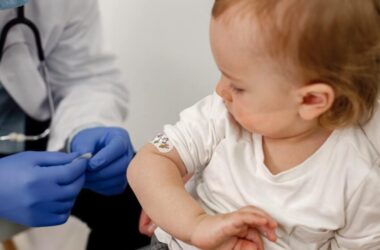

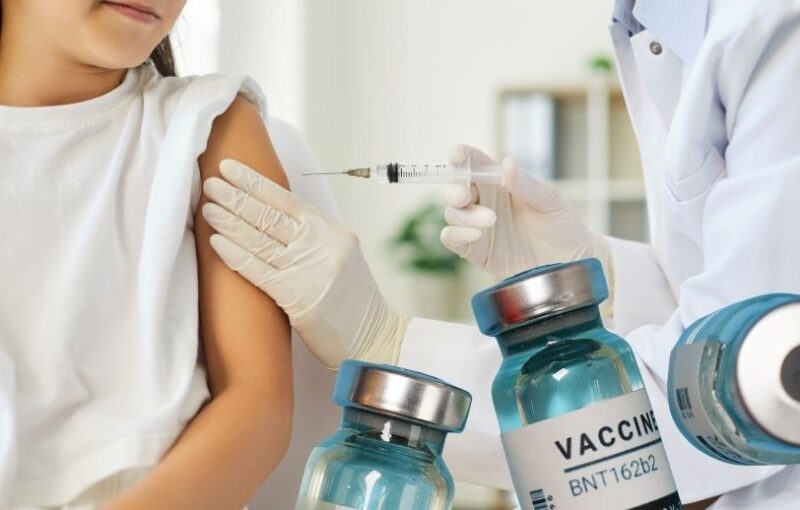
How is it possible that a president of a country gets to decide which vaccines your child should or could get? Because as of this year, the six vaccines your pediatrician used to automatically recommend for every child, are optional.
Not banned. Not unavailable. Just no longer on the “every kid gets this” list.
On August 10, 2026, President Trump signed an executive order confirming a change first attempted by federal health officials back in January: cutting the number of universally recommended childhood vaccines from 17 to 11. COVID-19, seasonal flu, hepatitis A, hepatitis B, RSV, and rotavirus are the six that moved off the automatic list.
The same executive order also splits MMR into three separate shots, but that’s just one piece of this large schedule change.
Let’s remind ourselves and take a quick look on the history of vaccines: in 20th century, smallpox alone killed nearly 300 million people, and measles used to infect almost every child and caused millions of deaths annually.
So what do all this vaccination changes mean? Some parents have been hoping and asking for this option for years. Others think it couldn’t come at a worse time.
Childhood vaccine schedule changes 2026: the case for and against
The case for: fewer automatic recommendations, more say for individual families, and a schedule that looks more like what’s used in countries such as Denmark, where several of these same vaccines aren’t universally recommended either.
The case against: history suggests that when a vaccine drops off the “automatic” list, fewer kids end up getting it, even when it’s still technically available. And this change lands while the U.S. is already living through its worst measles outbreak in 35 years, with nearly all of this year’s cases in people who weren’t vaccinated.
Both sides think they’re the ones protecting children. Neither side is wrong about their own logic.
What do you think? Vote below.
What actually changed
Here’s the part that gets lost in the headlines: none of the six vaccines were removed. What changed is the category they fall into.
Before, all 17 were “universally recommended” — the default, automatic advice given to every family. Now, 11 stay in that category: measles, mumps, rubella, polio, pertussis, diphtheria, tetanus, pneumococcal disease, chickenpox, and one dose of the HPV vaccine.

Did fuel prices push Spirit Airlines over the edge?
The other six — COVID-19, flu, hepatitis A, hepatitis B, RSV, and rotavirus — move into a category called shared clinical decision-making. In plain terms: your pediatrician can still recommend them, and you can still choose them. They just won’t come up automatically unless your doctor brings them up, or you ask.
Supporters call this respecting parental judgment. Critics call it a quiet way to lower vaccination rates without technically banning anything — because “ask your doctor” recommendations reach far fewer kids than “give this at every visit” defaults do.
Not the first attempt for childhood vaccine schedule changes
This isn’t actually a new decision. The Department of Health and Human Services tried the exact same 17-to-11 change back in January 2026. A federal court blocked it in March, ruling that the CDC couldn’t make a change like that without going through its usual expert review process first.
Trump’s August order doesn’t ask for a new review. It reaffirms the same change by presidential order — alongside a separate push to split the MMR vaccine into three shots instead of one, and instructions for federal agencies to challenge states over school vaccine exemption rules.
Whether the order holds up legally is still an open question. Whether it changes what actually happens in doctors’ offices this fall is already being tested.
Where this leaves parents
Nobody’s vaccine access changed this week. The childhood vaccine schedule changes 2026 shift the default. But it is this default that matters more than you think. A vaccine your doctor has to bring up gets given less often than one that’s just part of the routine.
That’s the real question underneath all of this: not whether these six vaccines work, but whether removing them from the default list quietly shifts how many kids end up getting them at all.
Leave a comment below or just vote in polls.
This is SpeakOutZone.
Your voice. Your platform.
*** This article discusses public policy and an ongoing scientific and political debate. It is not medical advice. For decisions about your child’s vaccination schedule, consult a qualified pediatrician. Sources: NPR, CNN, The Washington Post, Axios, Johns Hopkins Bloomberg School of Public Health, BioPharma Dive.

I’m not a doctor or a scientist. I’m a marketing professional who spent years working with health and lifestyle brands. I read a lot, ask a lot, and write about the topics that are worth debating about. My goal isn’t to tell you what to think. It’s to give you well-researched perspectives, honest opinions, and space to voice your thoughts.