
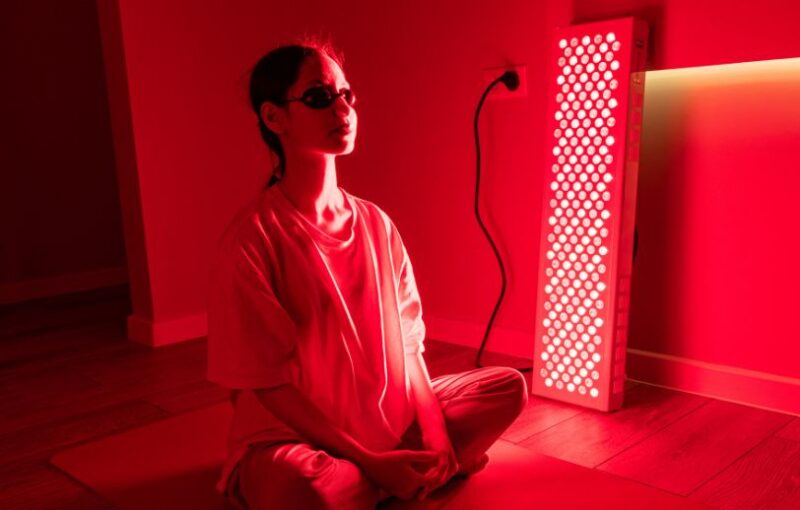
You’ve seen the photos. Influencers with their morning matcha in a meditative pose with faces bathing in red glow. Or an athlete under a panel that looks like something from a spaceship, recovering from last night’s game. Since biohacking is a topic in every podcast right now, the red light therapy is having its moment.
NASA researched it. Athletes swear by it. Beauty brands sell masks for €400. TikTok promises it will fix everything from acne to hair loss to muscle soreness.
Since I don’t use it, I am questioning its effects: does it actually work? Or is it just the wellness industry’s latest way to sell you a very expensive glow?
Red light therapy facts
First, let’s see what are the science facts behind the hype because there are some.
Red light therapy, also called photobiomodulation (yes, that’s a real word) or low-level laser therapy, uses specific wavelengths of red and near-infrared light on your skin. The typical range is between 630 and 850 nanometers. Not UV. Not something that tans or burns you. Just visible red light and its slightly-longer infrared cousin.
The theory is this: your cells contain something called mitochondria. You can imagine them as little power plants that generate energy in every cell of your body. Certain wavelengths of red light appear to stimulate mitochondria to produce more ATP, which is the body’s basic energy currency. More cellular energy, in theory, means faster healing, less inflammation, and better tissue repair.
That’s the science part. It’s real. There are peer-reviewed studies. NASA didn’t imagine this in a marketing meeting.
The question I have here is: does what happens in a controlled study translate to what happens when you sit in front of your €300 Amazon red light therapy panel for ten minutes a day, hoping your acne clears or your hair grows back? What do you think? Share your experiences.
Where the science actually holds up
I have studied red light therapy in depth and to be honest with you: I don’t think it is total nonsense. There are areas where the research is genuinely encouraging.
Wound healing and skin recovery. Multiple studies suggest red light can accelerate wound healing, reduce scarring, and support skin repair. This is one of the earliest and most consistent findings. Hospitals have used forms of this therapy for decades on specific patient groups.
Muscle recovery. Athletes love red light therapy for a reason — some research shows it may reduce muscle soreness and speed recovery after intense exercise. The effect isn’t dramatic, but it’s measurable in controlled studies.

Housing crisis: The dream of owning a home is dying
Certain skin conditions. Studies on acne, psoriasis, and even fine lines show some benefit. Not overnight-miracle level, but statistically meaningful for some users.
Hair growth. This one is interesting — there’s actual FDA clearance for certain red light devices marketed for hair loss (specifically, androgenetic alopecia). Research suggests it may help, particularly in early-stage hair thinning. Whether that translates to your Amazon-purchased device? That’s a completely different question.
Pain and inflammation. Some studies support red light therapy for joint pain and chronic inflammation. Again — real effect, but modest, and not a replacement for actual medical treatment when serious problems are involved.
Where the hype breaks down
Here’s what wellness brands don’t emphasize in their glossy ads.
Clinical devices are not the same as home devices. The panels that physiotherapists or dermatologists use deliver very specific wavelengths at very specific power levels. Your €200 Amazon panel? Probably delivers a fraction of that intensity. And what matter most at red light therapy is light intensity. It matters a lot. You may be sitting in front of what is essentially a very expensive red night light.
Consistency is everything — and nobody warns you. You always see ads or studies with only the end results or the positive results that typically involve daily use over weeks or months. Twenty minutes, three to five times a week, for eight to twelve weeks minimum. Miss sessions? Effect drops. Give up after two weeks because you didn’t see results? You were never going to. The wellness industry sells the panel; it doesn’t sell the discipline required to actually benefit from it.
The results are modest, not miraculous. Even in the best-case studies, red light therapy produces improvements measured in single-digit percentages. Better skin? A few points on standardized scales. Faster muscle recovery? A few percent. If you are looking for a miracle device that is going to “erase ten years from your face”, this is not it. It’s “gradually improve if you’re consistent for months” territory. The gap between how it’s marketed and how it actually performs is enormous.
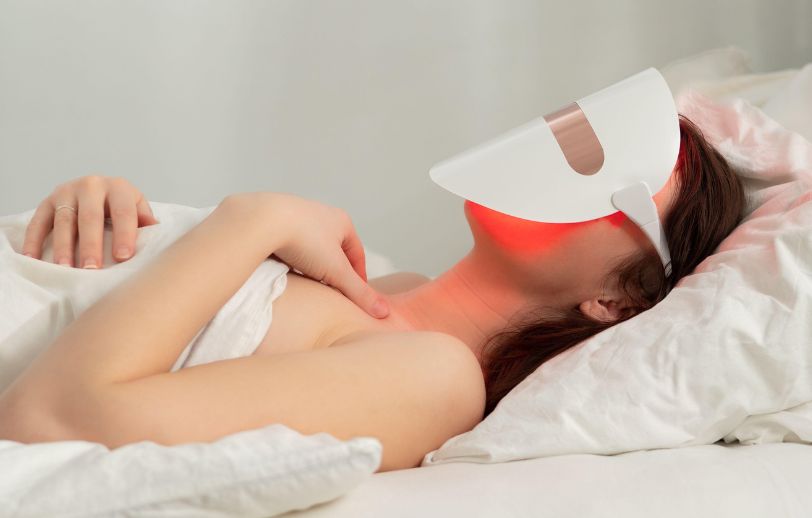
A lot of consumer devices are basically wellness theatres. The market is flooded with red light devices ranging from €40 handheld wands to €3,000 full-body panels. Many are underpowered, use the wrong wavelengths, or make claims that go far beyond any evidence. There’s no real regulation of what counts as a “red light therapy device.”
How I experienced it
I’ll tell you my own story here, because I think it matters.
A while back I had a mild injury. Not a big deal, just a wound that was healing slowly. Someone suggested I try red light therapy to speed things up. I borrowed a panel and used it regularly. I thought to myself: let the magic happen.
Did it? Honestly? I don’t know. The wound healed, of course it did, eventually all wounds heal. Maybe it was slightly faster than it would have been. Maybe it wasn’t. There was no dramatic transformation, no moment where I thought “wow, this really is magic.” Just… normal healing, possibly with a red glow in the background.
That’s the thing about red light therapy that nobody talks about. Even when it works, you often can’t tell. The effect is subtle, incremental, and only clear over long periods with something objective to measure. For someone treating a specific condition consistently over months, maybe. For someone shining a panel on their face for a week hoping to look ten years younger? You’re going to be disappointed.
Since then, there’s a question hanging above my head:
Did you, or someone you know, actually used red light therapy for hair growth and seen real results? Because that’s the promise every device seems to make now. TikTok is flooded with before-and-afters. And I’m genuinely skeptical. I want to know from real people, not brand ambassadors: did it work for you?
Is red light therapy worth the hype?
Here are my two cents on this: red light therapy is one of those wellness trends that lives in the murky middle. It’s not a scam because there really is science behind it and certain uses have decent evidence.
But more times than not, it is marketed as a miracle that will solve all your health problems. Home devices are inconsistent. Results require months of discipline. The gap between “some studies show benefits” and “buy this €400 panel and transform your life” is enormous.
If you have money to spare, curiosity, and the discipline to actually use a device consistently for months, try it. Use the red light therapy on a specific issue (wound healing, targeted hair regrowth, muscle recovery after training) and go in with realistic expectations. But before anything, you must understand that your at-home device is unlikely to match clinical results.
If you’re hoping for overnight transformation? Save your money. Buy better sleep, more protein, and a pair of decent running shoes. Boring answer, I know, but likely to deliver more real results than red light will.
The wellness industry loves selling you a device. It rarely sells you the truth about how modest the results actually are.
The bigger question
Red light therapy is one small piece of a much bigger pattern. The wellness industry is worth hundreds of billions of dollars. Its business model depends on selling us hope, wrapped in science-adjacent language, at premium prices. Cold plunges, ice baths, red light panels, supplements, biohacking devices — they all share a common thread. Some have real benefits. Most are wildly oversold. All of them are marketed as if they’re the missing piece that will finally fix what’s wrong with you.
Maybe the honest question isn’t “does red light therapy work?”, but “why do we keep believing the next expensive thing will save us?”
That’s not a question I can answer for you. But I’d love to hear what you think.
Voice your thoughts. Cast your votes. Tell us in the comments
This is your SpeakOutZone.
Your voice. Your platform.
*This article is for informational purposes only and is not medical advice. If you have a health condition or injury, please consult a qualified healthcare provider before starting any therapy.
See other polls about HEALTH

I’m not a doctor or a scientist. I’m a marketing professional who spent years working with health and lifestyle brands. I read a lot, ask a lot, and write about the topics that are worth debating about. My goal isn’t to tell you what to think. It’s to give you well-researched perspectives, honest opinions, and space to voice your thoughts.