

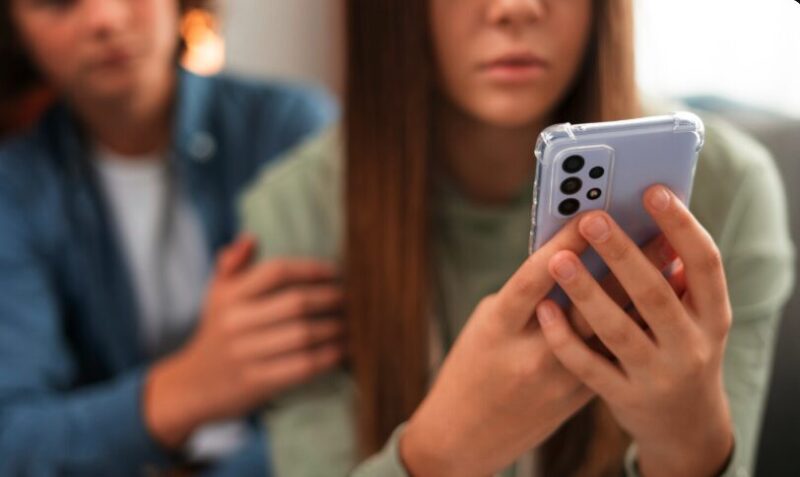
One of the biggest misconceptions about cyberbullying is that it’s easy to spot. That it happens in obvious situations, with clear signs, clear conflict, and clear intent.
But that’s not really true. It happens exactly where kids spend their time — on platforms that feel normal, social, and fun.
According to multiple studies, apps like Instagram, Snapchat, and TikTok are among the most common environments where cyberbullying occurs. Not because they are inherently harmful, but because they are built around visibility, interaction, and feedback.
Instagram, for example, is often associated with appearance-based comments and comparison. Snapchat creates fast, private exchanges where screenshots can spread quickly. TikTok amplifies content publicly, where comment sections can turn hostile in seconds.
And then there are gaming platforms and messaging apps — spaces parents often underestimate — where group dynamics, exclusion, and repeated targeting can quietly take place.
The reality is simple: cyberbullying doesn’t happen in one place. It follows kids across platforms.
Cyberbullying is happening where kids feel most comfortable
And that’s exactly why I didn’t see it at first.
I thought I would recognize it if it happened. I assumed there would be obvious signs — something direct, something visible, something I could immediately react to. But there wasn’t. It showed up differently. In small changes and in silence. In moments that didn’t seem important enough on their own — but together, they started to form a pattern. Less excitement. More hesitation. A shift in energy I couldn’t quite explain at the time. Until one conversation made it clear.
My child had been experiencing cyberbullying.
Not in a dramatic, public way. Not in a way that would stand out from the outside. But consistently enough to affect how they felt — and how they showed up in everyday life.
And the hardest part? I was there the whole time. But I didn’t see it.
The most honest answer is often “I don’t know”
That last option matters more than it seems. Because many parents genuinely don’t know. Not because they’re not paying attention — but because cyberbullying doesn’t always look like bullying. It’s not always direct insults or obvious attacks. Sometimes it’s more subtle, more difficult to detect.
It can look like:
- being excluded from group chats
- jokes that don’t feel like jokes anymore
- repeated silence or ignoring
- private messages no one else sees

And children don’t always talk about it. Some feel embarrassed. Others think it’s normal. Some are afraid it will get worse if they say something. And some simply don’t believe adults will understand.
That’s exactly why I missed it at first.
From cyberbullying to online shaming
When I started to understand what was happening, I noticed something else. The patterns looked familiar. What children experience as cyberbullying often mirrors what we see in adult online spaces — just in a different form. A comment becomes a reaction. A reaction becomes a group response. And suddenly, one moment turns into something much bigger.
This is the same dynamic we explored in The internet never forgets: the rise of online shaming, where public reactions escalate quickly and people lose control over how they are perceived.
The difference is that children are still developing their sense of identity. They don’t yet have the emotional distance or tools to process that kind of exposure. And that makes the impact deeper.
How this connects to cancel culture
The more I thought about it, the more I realized that cyberbullying is not an isolated issue. It’s part of a broader digital culture. A culture where reactions are fast, judgment is public, and context is often missing. A system in which our children are growing up.
They are learning how to communicate, react, and judge within an environment that rewards visibility and emotional response. And sometimes, they replicate it. Not always intentionally. But inevitably.
The emotional impact we don’t always see
What stayed with me the most wasn’t what was said. It was what changed.
- Confidence dropped.
- Conversations became shorter.
- There was hesitation where there used to be openness.
This is where cyberbullying becomes more than just an online issue. It becomes emotional.
Studies increasingly link experiences like cyberbullying with higher levels of anxiety, stress, and withdrawal in children. And when you combine that with constant screen exposure, the effect becomes even stronger.
That’s why this topic is closely connected to what we explore in screen time and childhood anxiety, where digital environments don’t just influence behavior — they shape emotional wellbeing. Cyberbullying doesn’t happen in isolation. It becomes part of a child’s internal world.
Why so many parents feel powerless
I’ll be honest — the hardest part wasn’t understanding what cyberbullying is. It was realizing how little control I actually had.
You can:
- set boundaries
- monitor screen time
- talk openly
But you can’t fully control what happens inside group chats, comment sections, or private messages. And that realization is uncomfortable. Because it shifts the question from “how do I prevent this?” to something much harder: “how do I stay aware without knowing everything?”

There is no perfect answer.
But there is a starting point.
Awareness.
What we can actually do
There is no single solution to cyberbullying. But there are things that make a difference:
- creating space for open, judgment-free conversations
- paying attention to small behavioral changes
- understanding the platforms your child uses
- being present, even when you don’t have all the answers
Sometimes, it’s not about fixing the problem immediately. It’s about making sure your child doesn’t feel alone in it.
This is bigger than we think
Cyberbullying is not rare. It’s not extreme and it doesn’t happen “somewhere else.”
It’s part of everyday digital life.
And the most dangerous part is not that it exists but that it often goes unnoticed.
I used to believe I would see it if it happened.
Now I know better.
Your voice matters
This isn’t just an article. It’s a conversation that more parents need to be part of. So now we want to hear from you.
- Have you seen signs of cyberbullying?
- Do you feel informed — or unsure?
- Do you think we’re doing enough to understand what kids experience online?
Scroll down. Share your thoughts.
Because the more we talk about cyberbullying, the less invisible it becomes.
This is your SpeakOutZone.
Your space to express.
NOTE: If you are being bullied online, the best thing you can do is to talk to someone you trust. If someone writes something online or posts a photo or video that upsets you, tell your mum, dad or carer, a teacher or a friend. The sooner you tell someone, the sooner something can be done to change it and make you feel safe.

I’m not a doctor or a scientist. I’m a marketing professional who spent years working with health and lifestyle brands. I read a lot, ask a lot, and write about the topics that are worth debating about. My goal isn’t to tell you what to think. It’s to give you well-researched perspectives, honest opinions, and space to voice your thoughts.