


Last updated on July 23, 2026
Children growing up today are the first generation surrounded not just by the internet or smartphones—but by artificial intelligence. From AI-powered tutoring systems and personalized learning apps to voice assistants and generative tools that help with homework, artificial intelligence is increasingly embedded in everyday childhood experiences. Therefore, the AI impact on children brain development raises urgent and important questions.
Researchers, educators, neuroscientists, and parents are beginning to explore how AI affects children’s brain development, cognitive skills, attention spans, and critical thinking. While the technology brings undeniable benefits, it also presents complex challenges.
In this article, we explore how AI may influence the developing brain, what science currently suggests, and what parents and educators should consider.

The developing brain: Why childhood matters so much
Before examining AI’s role, it’s essential to understand how children’s brains develop.
During childhood and adolescence, the brain undergoes rapid growth and restructuring. Neural connections are formed, strengthened, or pruned depending on experience. This process—known as neuroplasticity—means the brain adapts to its environment.
Key developmental areas include:
- Executive function (planning, impulse control, decision-making)
- Critical thinking and reasoning
- Attention regulation
- Memory formation
- Social cognition and emotional intelligence
Because children’s brains are highly plastic, repeated behaviors and habits—digital or otherwise—can shape long-term cognitive patterns.
So when AI becomes part of daily learning, problem-solving, and communication, it may influence how these neural pathways form.
AI and cognitive development
The AI impact on children brain development is one of the most hot topics these days.
Some early studies suggest that when AI is embedded in structured learning — where adults provide context and reflection — it can enhance metacognitive skills, helping children think about their own thinking rather than simply outsourcing it.
Other research has highlighted potential downsides: increased screen dependency and reduced practice with sustained analytical tasks when AI becomes the first resort for answers.
These findings suggest that it isn’t the presence of AI that matters most, but the learning ecosystem around it — how adults scaffold AI use, how often children are encouraged to attempt problems on their own, and how technology is balanced with traditional cognitive challenges.
AI tools can support learning in powerful ways:
1. Personalized learning
AI-powered platforms adapt content to a child’s pace and ability level. This can:
- Reinforce mastery
- Reduce frustration
- Support diverse learning styles
Personalized feedback may strengthen neural pathways related to understanding and retention.
2. Immediate information access
AI allows children to receive instant answers. While this can accelerate learning, it may also reduce opportunities for deeper cognitive effort.
Struggle, after all, is part of learning. When children work through a problem independently, they strengthen reasoning circuits. If AI consistently provides solutions, some researchers question whether it could weaken long-term problem-solving resilience.
The key issue isn’t AI itself—but how it is used.
By harnessing AI, every student can have access to a personalized tutor in every subject.”
Salman Khan, founder of Khan Academy
Does AI affect critical thinking in students?
Another common query is: Does AI affect critical thinking in students?
Critical thinking involves evaluating evidence, questioning assumptions, and analyzing complex information. When students use AI tools to generate essays, summarize texts, or answer questions, the cognitive load shifts.
Potential risks include:
- Reduced deep processing
- Overreliance on external tools
- Shortcut learning instead of conceptual mastery
However, AI can also enhance critical thinking—if used properly.
For example:
- Students can critique AI-generated responses.
- Teachers can use AI to present multiple perspectives.
- Learners can analyze biases within AI outputs.
The difference lies in whether AI replaces thinking—or stimulates it.
Educational psychologists emphasize guided use. When AI becomes a collaborative tool rather than a substitute for reasoning, it may actually strengthen higher-order thinking skills.
AI, attention span, and the dopamine question
One concern often raised about technology and the developing brain involves attention.
Children today are exposed to:
- Algorithm-driven content feeds
- Instant feedback systems
- Rapid-response digital interactions
AI systems are often optimized for engagement. That means they are designed to capture and maintain attention.
Repeated exposure to highly stimulating environments may influence dopamine pathways—the brain’s reward system. Over time, this could affect:
- Sustained attention capacity
- Tolerance for slower-paced learning
- Motivation for non-digital activities
However, it’s important not to oversimplify. AI itself is not inherently addictive. Rather, certain implementations—especially those tied to social media and recommendation engines—can reinforce habitual usage patterns.
The developing brain is sensitive to repetition. If children primarily engage with fast, AI-curated stimulation, their attention regulation systems may adapt accordingly.
Balanced exposure remains critical.
Social and emotional development in an AI world
Beyond cognition, AI may influence social development.
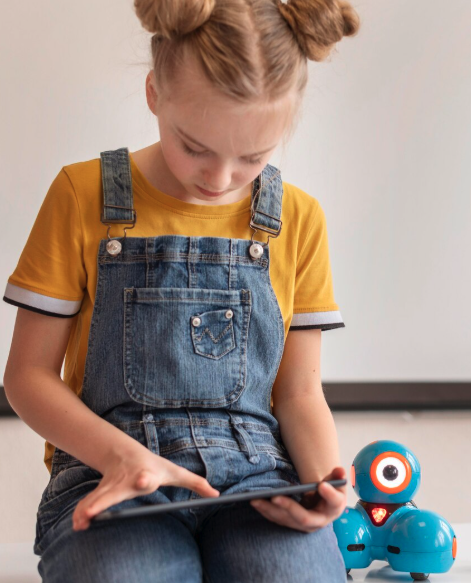
Children increasingly interact with:
- Virtual tutors
- AI chatbots
- Voice assistants
While these systems simulate conversation, they do not replace human reciprocity. Social skills—like reading emotional cues, managing conflict, and building empathy—are best developed through human interaction.
Concerns include:
- Reduced face-to-face communication
- Substitution of AI companionship for peer relationships
- Altered expectations of responsiveness and control
On the other hand, AI can also support children with social difficulties. For neurodivergent learners, structured AI interactions may provide safe environments to practice communication skills.
Again, context matters more than technology alone.
The benefits: Why AI is not the villain
It’s easy to frame AI as a threat to brain development, but the reality is more nuanced.
AI can:
- Support children with learning disabilities
- Provide language translation tools
- Offer personalized tutoring in under-resourced communities
- Encourage curiosity through interactive exploration
When used intentionally, AI may enhance learning efficiency and expand educational access.
The developing brain thrives on challenge, novelty, and feedback. AI can provide all three—if integrated thoughtfully.
Screen Time vs. AI Time: Is There a Difference?
Not all screen time is equal.
Passive scrolling differs significantly from:
- Interactive learning
- Problem-solving with feedback
- Guided exploration
AI introduces adaptive interaction. Instead of static content, children engage in dynamic exchanges.
The important distinction is:
- Passive consumption vs. active engagement
- Replacement vs. augmentation of thinking
If AI becomes a crutch, cognitive engagement may decline.
If AI becomes a scaffold, cognitive growth may accelerate.
Parents and educators play a crucial role in shaping that outcome.
Long-Term Brain Development: What We Still Don’t Know
The truth is, AI is evolving faster than long-term neuroscience studies can track.
We do not yet have decades-long data on children raised with generative AI tools. Current research often draws parallels to:
- Early internet adoption
- Social media exposure
- Video game engagement
But AI represents a more adaptive and personalized technology layer.
Open questions include:
- Will AI reduce independent problem-solving skills?
- Could it reshape memory reliance?
- How might it affect creativity?
- Will cognitive offloading become the norm?
Neuroscience suggests the brain adapts to repeated patterns. If children consistently outsource thinking to AI, neural efficiency may develop around delegation rather than internal processing.
But if AI is used as a thinking partner, the brain may strengthen metacognitive awareness instead.
The outcome likely depends on usage habits, not mere exposure.
Your turn. Vote and share your thoughts in the comments.
How Parents and Educators Can Guide Healthy AI Use
Rather than banning AI, experts recommend mindful integration.
1. Encourage Co-Thinking
Ask children to explain AI-generated answers.
Challenge them to critique outputs.
2. Promote Independent Attempts First
Have students try solving problems before consulting AI.
3. Balance Digital and Offline Activities
Physical play, reading, creative arts, and social interaction remain essential for brain development.
4. Teach Digital Literacy
Children should understand how AI systems work, including limitations and biases. They should also be aware that these technologies can already be misused in real-world scenarios. 👉 Explore the Grok AI controversy and ongoing lawsuits
5. Model Healthy Use
Adult behavior strongly influences children’s habits.
AI literacy may soon become as fundamental as reading literacy.
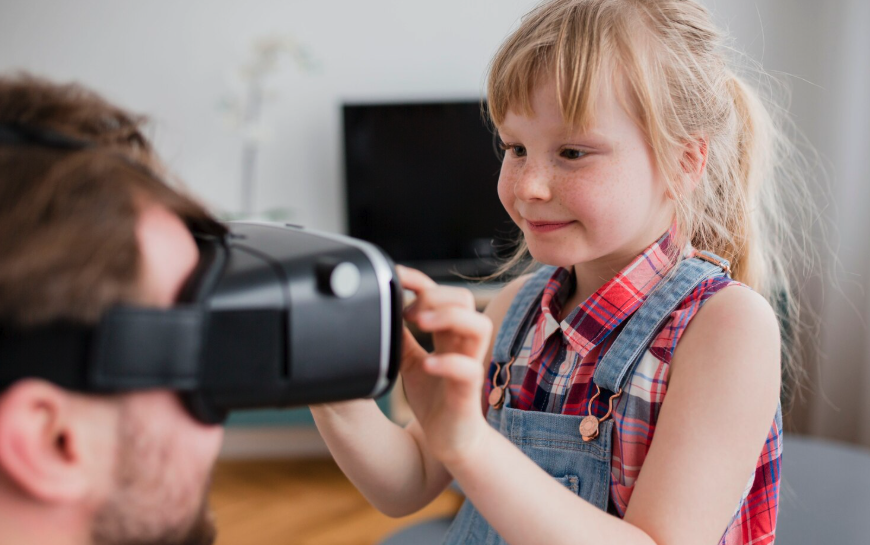
Growing Up With AI: A Cognitive Turning Point
Every technological shift has raised fears about brain development—from television to smartphones.
Artificial intelligence is different in one key way: it doesn’t just deliver content. It responds, adapts, and participates.
That makes it more powerful—but also more complex.
Growing up with AI could:
- Enhance personalized education
- Strengthen adaptive learning
- Expand access to knowledge
Or it could:
- Reduce cognitive endurance
- Encourage dependency
- Shift how children process information
Most likely, it will do both. What do you think?
Final Thoughts: The Future of the Developing Brain in the AI Era
The question is not whether AI will shape children’s brain development. It already is.
The real question is: How will we shape the way children use AI?
The developing brain is remarkably resilient and adaptive. It responds to environment, habits, and expectations.
Artificial intelligence is a tool.
Like all tools, it can build—or erode.
By encouraging critical thinking, maintaining human connection, and teaching responsible use, we can help ensure that growing up with AI strengthens, rather than weakens, the developing brain.
As this generation comes of age, the world will witness the long-term cognitive effects of AI integration. The decisions parents, educators, and policymakers make today may influence not only academic performance—but the architecture of thought itself.

I’m not a doctor or a scientist. I’m a marketing professional who spent years working with health and lifestyle brands. I read a lot, ask a lot, and write about the topics that are worth debating about. My goal isn’t to tell you what to think. It’s to give you well-researched perspectives, honest opinions, and space to voice your thoughts.