

Last updated on September 2, 2026
If you’re a parent in America, this conversation might already have come up: should your child get the MMR vaccine as one combined shot, or as three separate ones? Should it be given all at once, or spaced across separate visits? And once you’re asking those questions, the harder one follows on its own: should every recommended vaccine be given at all?
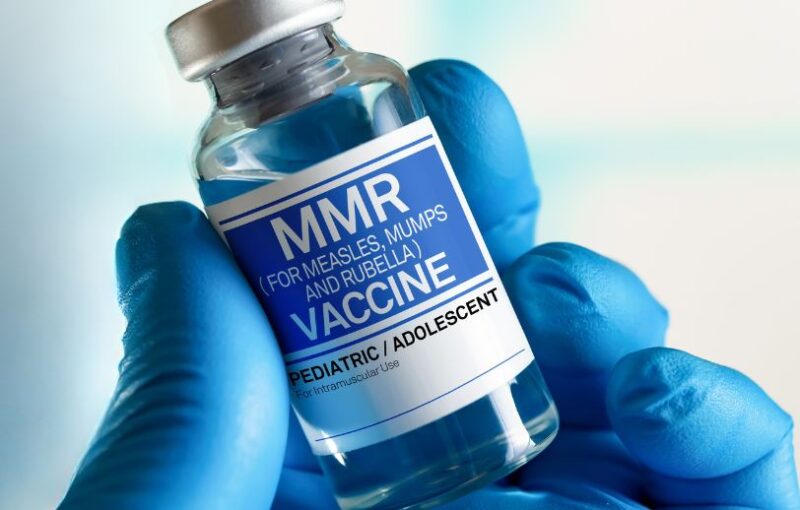
Here’s what’s happening. For over fifty years, American children have received a single vaccine called MMR that protects them against three diseases at once: measles, mumps, and rubella. Two shots, given a few years apart. Simple.
On August 10, 2026, Donald Trump signed an executive order that could change all of that. The order recommends the MMR split into three shots — one for each disease — administered at separate medical visits. That would turn two injections into six.
The medical establishment calls this reckless. Millions of American parents call it overdue. Both sides believe they are protecting children. Both sides think the other is dangerous.
We’ve written before about how vaccine trust broke down in the first place. This is what happens when that broken trust reaches the Oval Office.
Read further, vote below, leave a comment at the end.
What Trump’s executive order really says
Trump’s executive order says that:
- the MMR vaccine “should be administered in three separate single-disease shots once such products are domestically available” and that
- “to the maximum extent feasible, all childhood immunizations should be administered at separate medical visits“
The same order goes even further. Additionally it reduces the number of universally recommended childhood vaccines from around 17 to 11. But since so much is happening with vaccination, we broke this down in a separate article.
Three details matter more than the headlines suggested.
First, the executive order is a recommendation. It does not force pediatricians, hospitals, or parents to do anything. Federal courts have already blocked previous attempts by Health Secretary Robert F. Kennedy Jr. to unilaterally rewrite the vaccine schedule, and this order is expected to face the same legal challenges.
Second, the separate single-disease shots the order recommends do not currently exist in the United States. Merck, the sole American MMR manufacturer, has stated there is no published evidence supporting the split and industry analysts say it would take the company more than a decade to develop and license monovalent alternatives.
Third, Trump listed his reasons from the Oval Office: parental authority, improved trust in vaccines, and alignment with other countries. The CDC’s official position is bluntly opposite. Its website states that no published scientific evidence shows any benefit in separating the combination MMR vaccine into three individual shots.
So what is the debate actually about?
Not the science — the science on MMR safety has been settled for decades. It is about who gets to decide.
The parents’ case: “Give me the choice”
This is where the story gets uncomfortable for anyone who wants to dismiss the movement for separate MMR shots as fringe.
A recent KFF and Washington Post survey found that 41% of American parents agree with the view that children are healthier when their vaccines are spaced out rather than given in combination. Among Republican parents, roughly half hold this view. Among Democratic parents, it is around 28%. This is not a niche opinion. This is your kid’s classmate’s mom.
Their arguments for splitting MMR into three shots are specific — not the abstract vaccine skepticism you may already be familiar with, but three concrete concerns.
The “peak immune load” argument. Hitting an infant’s immune system with three live viruses in one injection feels risky, even if mainstream immunologists say the concern doesn’t hold up biologically. An infant’s immune system encounters thousands of antigens daily from ordinary life. But intuition wins over statistics, and it has for decades.

The autonomy argument. If a parent wants to space out doses and pay for the additional visits themselves, whose business is that? Every other area of medicine assumes informed consent and the right to alternatives. Why is vaccination the one place where “trust the schedule and stop asking” is the acceptable answer?
The European alignment argument. Trump claimed the change would align the U.S. with “advanced developed nations.” As we’ll see in the next section, this argument doesn’t survive contact with the facts — but the fact that it sounds right tells you something about how disconnected the average parent has become from actual global vaccine policy.
Dismissing parents asking these questions as anti-vax has not worked as a communication strategy. If anything, it has hardened the position. That’s the piece the medical establishment keeps refusing to learn.
The doctors’ case: “This isn’t a real debate”
The medical establishment’s position on splitting MMR into three shots is close to unanimous, and it is not subtle.
The combined MMR vaccine has been in use since 1971. Clinical data has consistently shown that the trivalent shot produces the same immune response as three separate vaccines, with fewer injections, fewer clinic visits, and fewer missed doses. Merck itself has publicly stated there is no evidence of benefit in separating the shots.
The push to split MMR did not come from clinical research. It came from a 1998 study by British physician Andrew Wakefield — a study built on just 12 children, with data later found to be falsified. Wakefield had been paid by lawyers suing MMR manufacturers before the study was published. His paper was formally retracted. His medical license was revoked in the UK. And yet the claim that MMR causes autism keeps coming back.
The public health consequences of Wakefield’s press conference were catastrophic. In the decade after 1998, MMR uptake in the UK collapsed. Measles cases rose more than tenfold between 1998 and 2008. Tens of thousands of preventable infections occurred, and dozens of children died. We’re already seeing echoes of this pattern in current outbreaks.

The practical objections to Trump’s MMR order are equally sharp. Each child receives two MMR doses on the standard schedule. Splitting the vaccine would mean six injections instead of two, spread across additional pediatric visits. Studies consistently show that adding visits and injections increases the rate of missed or delayed doses — which means lower community immunity and higher disease risk.
And the Europe argument? It doesn’t hold. No country in the world uses three separate single-disease shots as part of its standard childhood vaccine schedule. Every European nation Trump referenced uses the combined MMR. Some lower- and middle-income countries use a combined measles-and-rubella shot, but nowhere on Earth splits into three.
What both sides refuse to say out loud
Here is where most articles about vaccines stop. This one won’t.
To the parents demanding separate MMR shots: You are not, in practice, asking for a medical option. The option you’re describing doesn’t exist and won’t exist for at least a decade. What you’re actually asking for is permission to delay, space out, or skip doses under the cover of an alternative that isn’t real. If the monovalent shots existed tomorrow, most of the loudest advocates for splitting wouldn’t take them on the accelerated separate-visit schedule anyway. Be honest about what the ask actually is.
To the medical establishment: Every time a public health official goes on television and expresses irritation instead of empathy, another parent decides the experts aren’t listening. The autism claim keeps returning not because the science supports it — it doesn’t — but because the medical explanation (“we just have better diagnostic criteria now”) does not emotionally satisfy a parent who watched their child change. You are technically right. You are also losing the room. That gap is the problem.
Neither side wants to sit with this. But the debate about MMR is not really about MMR. It’s about who trusts whom, and why that trust broke down in the first place.
What happens next with the MMR split order
Strip away the political noise, and the likely outcome of Trump’s MMR order is: not much, at least not fast.
The order has no binding power over private physicians, hospitals, or state health departments. Previous Trump administration attempts to unilaterally alter the childhood vaccine schedule have been blocked in federal court. Merck is not going to spend a decade and hundreds of millions of dollars to develop monovalent alternatives without regulatory pressure or reimbursement guarantees. Most pediatricians will continue to recommend and administer the combined MMR shot exactly as they do today.
What will change is the conversation. Vaccine skepticism has been given the loudest possible megaphone, at the moment the U.S. is already recording its worst measles year in more than three decades. More parents will delay. More parents will space out. Some will skip.
Whether that produces the “increased trust” the executive order claims to want, or the community immunity collapse that public health officials fear, is the actual question.
And now it’s your turn.
Your voice on the MMR split debate
One vaccine, three shots, forty years of debate, and no easy answer.
What we know: measles is back in America in numbers we haven’t seen in three decades. What we don’t know: whether giving parents more choice will make that better or worse.
Voice your thoughts in the polls above and share this with the parent in your life who is actually facing this decision at their next pediatrician visit.
This is your SpeakOutZone.
Your voice. Your platform.
**This article discusses public policy and ongoing scientific debate around the MMR vaccine. It is not medical advice. For decisions about your child’s vaccination schedule, please consult a qualified pediatrician or public health professional. Sources referenced: CDC, CNN, NBC News, ABC News, FactCheck.org, KFF/Washington Post survey, Health Affairs, CIDRAP, Merck public statements.

I’m not a doctor or a scientist. I’m a marketing professional who spent years working with health and lifestyle brands. I read a lot, ask a lot, and write about the topics that are worth debating about. My goal isn’t to tell you what to think. It’s to give you well-researched perspectives, honest opinions, and space to voice your thoughts.