

Last updated on July 23, 2026
For decades, the middle class was sold as the foundation of modern society. Work hard, get educated, build a career, buy a home, raise a family, save a little for the future. That was the promise.
But something has shifted.
Today, millions of people who once believed they were financially stable feel like they’re running on a treadmill that keeps speeding up. Salaries barely keep up with inflation. Housing prices rise faster than wages. Healthcare, education, and everyday living costs continue climbing.
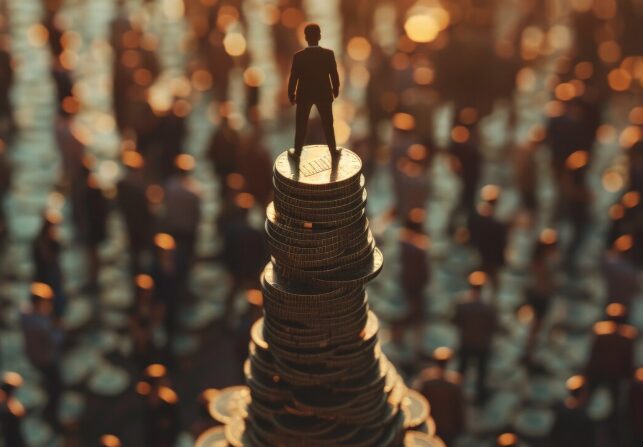
Meanwhile, the richest individuals on the planet are accumulating wealth at a pace that feels almost unreal.
It raises an uncomfortable question: if productivity has increased, technology has advanced, and economies have grown, why does financial security feel further away for so many people?

Some economists argue that this isn’t a coincidence. They suggest the economic system is slowly tilting in favor of concentrated wealth — and that the middle class is the group paying the price.
Before we dive deeper, let’s start with a simple question.
If you have more thoughts you want to voice, do it in the comments.
The middle class used to represent stability
For most of the twentieth century, the middle class was not just an income group. It was a symbol of stability.
Governments across the Western world invested heavily in systems that helped people climb into it: public education, affordable housing programs, labor protections, progressive taxation, and expanding job markets.
- Owning a home was considered realistic.
- Raising a family on one income was often possible.
- Saving for retirement was expected, not exceptional.
Economic growth was not perfect, but it was broadly shared. As productivity increased, wages also rose. When companies performed well, workers often benefited too.
But starting in the late twentieth century, something began to change.
- Wages stopped rising at the same pace as productivity.
- Corporate profits grew faster than employee compensation.
- Housing markets started accelerating beyond what average incomes could sustain.
At the same time, policies around taxation and financial regulation began shifting in ways that favored capital over labor.
The result? Wealth began concentrating at the very top.
How the middle class slowly started losing ground
The decline of the middle class didn’t happen overnight. It happened quietly, gradually, almost invisibly.
One generation still believed in the promise. The next began to struggle to reach it.
There are several forces driving this shift.
- Housing costs have exploded in many major cities. Buying a home — once a hallmark of middle-class stability — is becoming increasingly difficult for young families.
- Education costs have risen dramatically, leaving graduates with significant debt before their careers even begin.
- Healthcare expenses continue to climb in many countries, creating financial pressure even for households with stable employment.
- At the same time, many secure, long-term jobs have been replaced with contract work, gig labor, and precarious employment structures.
Individually, each of these trends might seem manageable. But together, they form a powerful pressure pushing households toward financial fragility.

The result is a growing sense that the economic ladder has become harder to climb — and easier to fall from.
Let’s debate more in the comments.
Billionaire wealth is growing faster than ever
While financial pressure grows for many households, wealth at the top has expanded dramatically.
Over the past two decades, the number of billionaires worldwide has increased rapidly. Their combined wealth has reached levels that previous generations would have struggled to imagine.
In 2024 alone, the world counted around 2,769 billionaires with a combined wealth of about $15 trillion. Their fortunes increased by $2 trillion in just one year, growing at a rate three times faster than the year before.
Even more striking, the wealth of the world’s ten richest men grew by nearly $100 million per day on average, according to inequality reports tracking global wealth trends.
Zooming out even further, billionaire wealth has more than doubled over the past decade, reaching roughly $14 trillion globally, highlighting how quickly wealth has concentrated at the very top of the economic ladder.
Supporters of this system argue that billionaire success reflects innovation, entrepreneurship, and economic growth. After all, many global companies that transformed industries were built by visionary founders.
But we see something very different.
Modern economic systems increasingly reward those who already possess capital. Investments grow faster than wages. Assets appreciate faster than salaries. Tax structures often treat capital gains more favorably than labor income.
In simple terms: wealth generates more wealth — often at a faster rate than work generates income.
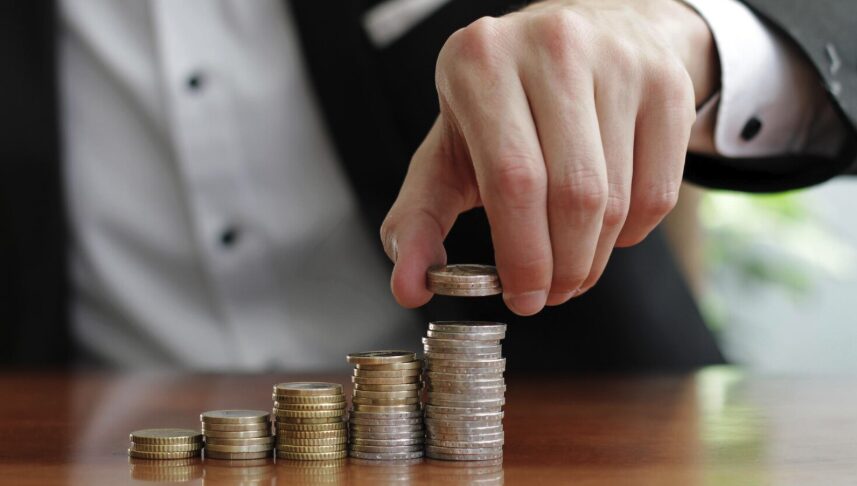
And when that dynamic continues for decades, the gap between the very rich and everyone else begins to widen dramatically.
The political power of wealth
One of the most controversial aspects of this debate is the relationship between wealth and political influence.
Large fortunes often translate into significant political leverage. Campaign donations, lobbying efforts, media ownership, and policy influence can shape how economic rules are written.
This raises uncomfortable questions about fairness.
If the wealthiest individuals and corporations have disproportionate influence over policy decisions, who exactly are those policies designed to benefit?
We want to hear what you think. Vote — and explain your answer in the comments.
Do you agree that tax cuts aimed at stimulating investment often reduce public revenue?
Can deregulation intended to promote growth weaken worker protections?
Are housing markets shaped by investors purchasing large amounts of property?
Each decision may have its own justification. But the long-term consequence could be a society where economic mobility slows down and the middle class becomes increasingly fragile.
The middle class and the illusion of stability
For many people, the most frustrating part of this situation is not sudden poverty but gradual insecurity.
Life still looks relatively stable on the surface:
- People still work full-time jobs
- They continue to pay mortgages or rent
- They still try to save for the future
But the margin of safety is shrinking.
Unexpected medical bills, economic downturns, layoffs, or housing market shocks can suddenly push households into financial distress.
This is why some economists describe the current moment as a transition — not necessarily toward mass poverty, but toward a society where fewer people enjoy long-term financial stability.
In that sense, the middle class is not disappearing overnight. It is slowly being squeezed.
The middle class question we rarely ask
There is another uncomfortable angle to this discussion.
For decades, economic growth has been celebrated as the ultimate measure of success. Stock markets rising, companies expanding, billionaire fortunes growing — all are often presented as signs of a healthy economy.
But economic growth alone does not automatically guarantee broad prosperity.
A society can grow wealthier overall while distributing that wealth increasingly unevenly.
The real question is not only how much wealth is created — but how it is shared.
If the majority of gains concentrate among a small group at the top, the result can be a growing disconnect between economic statistics and everyday lived experience.
That disconnect is exactly what many people feel today.
Is the middle class actually disappearing?
Not everyone agrees with the narrative that the middle class is disappearing.
Some analysts argue that global poverty has declined dramatically and that technological progress has created opportunities unimaginable just decades ago.
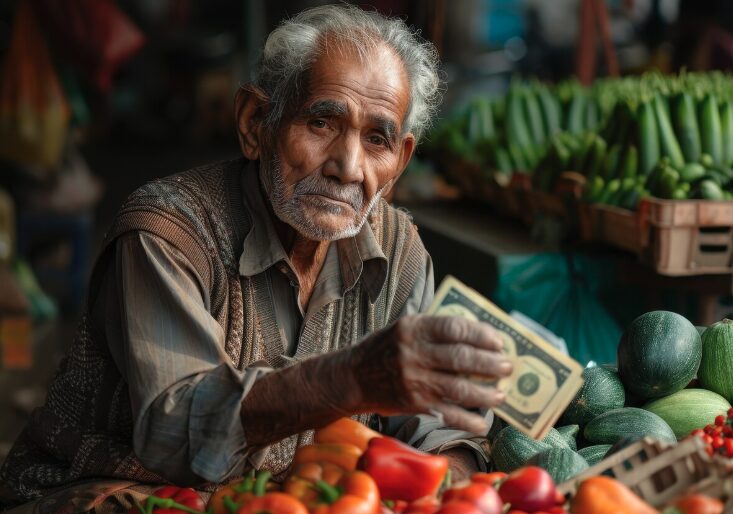
Others point out that income statistics can be complex and that some households have gained access to cheaper goods, better technology, and improved quality of life.
Both perspectives contain elements of truth.
But statistics alone do not capture perception — and perception matters.
When large numbers of people feel that financial security is slipping further away despite working hard, frustration builds. That frustration often shows up in political debates, social movements, and cultural tensions.
And once trust in economic fairness begins to erode, rebuilding it can be extremely difficult.
So what happens next?
There is no single solution to the economic pressures facing the middle class.
Should we have higher taxes on extreme wealth? Or stronger labor protections, housing reforms, and education cost reductions? Some believe technological innovation will eventually create entirely new opportunities.
What is clear is that the conversation is far from over.
As wealth inequality becomes more visible and economic pressures intensify, debates around fairness, opportunity, and responsibility are likely to grow louder.
And that debate will not be settled only by economists or policymakers.
It will be shaped by ordinary people sharing their experiences, frustrations, and ideas about what a fair society should look like.
So now we turn the conversation to you.
Do you believe the system is working as intended, rewarding innovation and success?
Or do you think something deeper has shifted — leaving the middle class increasingly vulnerable while wealth concentrates at the top?
Tell us what you think.
This is your SpeakOutZone.
Your space to express your thoughts, challenge ideas, and take part in the debate.

I’m not a doctor or a scientist. I’m a marketing professional who spent years working with health and lifestyle brands. I read a lot, ask a lot, and write about the topics that are worth debating about. My goal isn’t to tell you what to think. It’s to give you well-researched perspectives, honest opinions, and space to voice your thoughts.