


Last updated on July 23, 2026
The debate about social media and teens is no longer speculative. It is no longer just parental paranoia. It is no longer a fringe concern.
Over the past decade, conversations about adolescent mental health have increasingly intersected with discussions about digital life. Researchers, policymakers, teachers, and even former tech executives have publicly questioned how algorithm-driven platforms influence developing minds. What once felt like harmless entertainment now sits at the center of serious social concern.
Across several Western countries, reported anxiety, depression, and self-harm among adolescents — particularly teenage girls — have risen significantly. While correlation does not equal causation, the timing overlaps with the mass adoption of smartphones and image-based social platforms.
Internal research disclosed by major tech companies revealed that executives were aware that certain features could worsen body image issues in teenage users. Yet despite this knowledge, structural changes were incremental and often optional rather than foundational.
This raises a difficult but necessary question: if platforms are aware of the psychological risks, why does the system largely remain the same?

Teenage girls, body image and the algorithm
When people search for social media and body image, they are often thinking about girls.
Filters. Edited photos. Influencer culture. “Get ready with me” routines performed by 11-year-olds. Skincare routines marketed to pre-teens. Cosmetic procedures discussed casually in comment sections. The algorithm amplifies what captures attention. And appearance captures attention.
Teenage girls are exposed to:
- hyper-edited beauty standards
- comparison-driven content
- influencer lifestyles built on perfection
- constant visual evaluation
The result? Increased social comparison cycles and earlier dissatisfaction with natural appearance.
In some regions, cosmetic consultations for teenagers have increased. Makeup use is starting younger. “Glow-up” culture has normalized transformation narratives before puberty is even complete. Is this empowerment — or pressure packaged as empowerment?
The algorithm does not distinguish between healthy inspiration and unhealthy obsession. It simply rewards engagement. And appearance drives engagement.
Teenage boys, masculinity and algorithmic radicalization
But focusing only on girls would miss half the story. Searches for the impact of social media on adolescent boys are rising as well — and for different reasons.
Teenage boys are often funneled into algorithmic pipelines centered around dominance, status, wealth, and masculinity. Influencers like Andrew Tate gained massive traction by promoting hyper-masculine, controversial views about gender roles, power, and relationships.
Whether one agrees with him or not, his popularity revealed something critical: algorithms amplify emotionally charged content.
Teenage boys exposed repeatedly to:
- content framing women as inferior
- narratives equating worth with dominance
- materialistic success metrics
- grievance-based rhetoric
may internalize distorted ideas about relationships and identity.
And here’s the nuance: the same algorithm that pressures girls to be perfect can pressure boys to be powerful.
Different outputs. Same system.
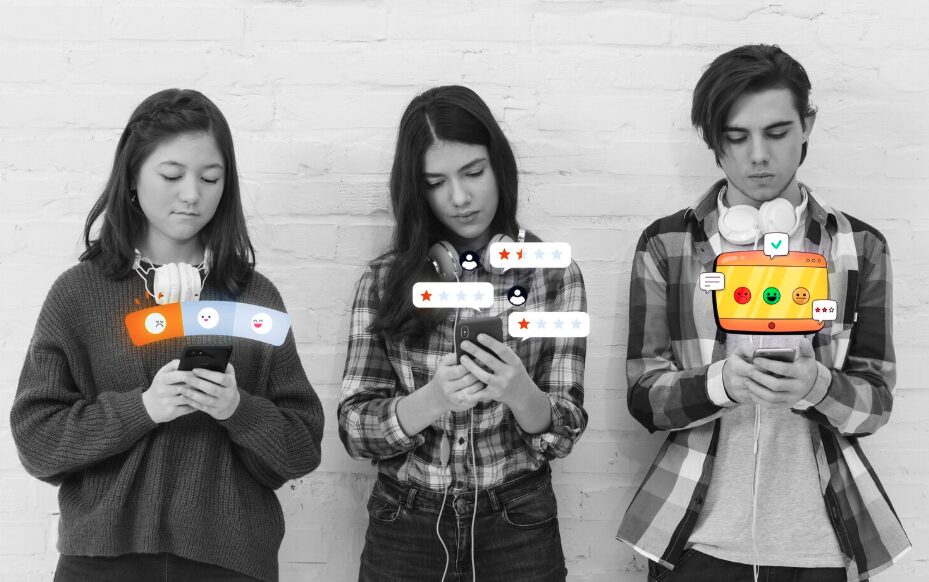
How algorithms shape behavior — not just mood
The impact of social media extends beyond self-esteem into patterns of behavior and communication.
Algorithms amplify emotionally intense content because intense content drives interaction. Outrage spreads faster than nuance. Conflict generates more comments than agreement. This design logic subtly influences how teenagers interact with one another.
Algorithms optimize for engagement. Engagement is often driven by outrage, comparison, validation, or fear. As we all know, this affects how teens speak to each other. The conflicts escalate faster and more intense, rumors spread rapidly and aggression manifests.
For some girls, aggression may manifest through relational dynamics: exclusion, screenshot circulation, or public call-outs. For some boys, aggression may surface through confrontational rhetoric or mockery.
The platforms themselves do not instruct teens to behave this way, but they create environments where extreme reactions gain visibility and social reward. If sarcasm earns likes, sarcasm increases. If humiliation goes viral, humiliation becomes performative.
So, is the industry making profit by doing harm? Keep reading.
If they know it harms — why doesn’t it change?
Here is where the debate becomes uncomfortable.
Social media companies operate on advertising-based models. Revenue increases when:
- users stay longer
- users interact more
- users return frequently
That creates a structural tension. Features that slow users down or reduce emotional intensity may improve well-being — but they might also reduce time spent on the platform. And reduced time means reduced revenue. While companies have introduced safety dashboards, parental controls, and reporting tools, critics argue that these measures treat symptoms rather than redesigning the underlying incentive system.
Can a platform built to maximize attention truly minimize psychological impact without sacrificing profit?
For now, the business model itself remains untouched.
👇 Speak out zone – quick reaction
Vote — then explain your reasoning below.
Social media and teens age limits: solution or illusion?
Governments are beginning to intervene. Australia has announced plans to restrict social media access for users under 16. The European Union continues to debate stronger youth protections and searches for social media age restrictions for teens have surged.
Supporters say:
- adolescent brains are more vulnerable to social comparison
- delaying access reduces exposure to algorithmic manipulation
- earlier limits could reduce anxiety spikes
However, critics question feasibility. Teens are digitally savvy and often find workarounds. Age verification systems raise privacy concerns. Enforcement across global platforms is complex. And some experts argue that shielding teenagers entirely may delay digital literacy rather than strengthen it.
And here’s the key question:
Is banning access solving the problem — or avoiding it?
This debate connects directly to what we explored in our article on smartphone bans in schools. Because removing access in one space does not eliminate digital pressure in another.
Parents, platforms or culture?
It’s easy to blame big tech. It’s harder to examine cultural participation.
Platforms design systems but parents provide devices. Advertisers fund engagement and influencers monetize visibility. Teenagers seek belonging within the only environment they know.
Yet power is not evenly distributed. Tech companies employ behavioral scientists and data engineers to refine engagement loops. Teenagers do not have comparable influence over the system shaping their experience. While parental guidance matters, the architecture of the platforms themselves carries enormous weight.
Perhaps the question is not who is solely responsible — but who has the greatest capacity to implement meaningful change regarding social media and teens.
Responsibility is layered.
Tech companies design the system. Users enter it.
Is this moral panic — or overdue accountability?
Some critics warn that society has always feared new technology. Television was accused of destroying attention spans. Video games were blamed for violence. Every media shift has triggered anxiety. Over time, cultural adaptation tends to soften initial fears.
However, today’s platforms differ in one significant way: personalization at scale. Algorithms adapt in real time based on user behavior. They do not simply broadcast content; they curate it individually. That level of psychological tailoring is historically unprecedented.
So is this panic? Or are we only beginning to understand the long-term implications of a system designed to study and influence attention at massive scale?
What kind of digital world are we building?
Teenage girls navigating beauty filters.
Teenage boys navigating dominance narratives.
Algorithms optimizing for engagement.
Companies optimizing for revenue.
And adults debating regulation after harm signals emerge. This is not a simple villain narrative.

Social media has connected communities, amplified marginalized voices, and created economic opportunity.
But it has also intensified comparison, accelerated identity formation, and commercialized attention.
The real debate is not whether social media is entirely good or entirely bad. It is whether its current design aligns with adolescent development — or exploits it.
👇 Final question for you:
Comment below.
Like 👍 if you believe reform is necessary.
Dislike 👎 if you think the debate is exaggerated.
This is the Speak out zone.
Now it’s your turn.

I’m not a doctor or a scientist. I’m a marketing professional who spent years working with health and lifestyle brands. I read a lot, ask a lot, and write about the topics that are worth debating about. My goal isn’t to tell you what to think. It’s to give you well-researched perspectives, honest opinions, and space to voice your thoughts.